Why does an oil spill need cleaning up?
The short answer
A spill needs a prompt, proportionate response because escaped oil can remain in materials or move along routes that affect people, buildings, water and neighbouring land. Repairing the leak does not remove what has already escaped. The necessary work depends on the evidence at the site; it may involve containment, investigation, removal, treatment and verification. A visible stain, the disappearance of a smell or a contractor's departure is not enough on its own to decide that the incident has been resolved.
Once a leaking tank has been repaired, it is tempting to think the incident is finished. The source may be secure, but the oil that escaped still needs to be considered. Cleanup is about understanding and addressing what has happened to the property and its surroundings, then showing that the agreed work has achieved its purpose.
By Spill-Response Editorial Team · Sources checked: 26 October 2026 · Northern Ireland focus
In this guide
- Separate stopping the leak from dealing with the consequences
- Understand the routes that matter at your property
- Recognise that different concerns need different evidence
- A recent spill is not simply a historical-land exercise
- Why waiting for the smell to fade is insufficient
- Choose a method that answers the actual problem
- Plan the evidence before the area is closed up
- Coordinate the practical and financial decisions
- Your practical checklist
- Your next step
- Sources and further reading
Separate stopping the leak from dealing with the consequences
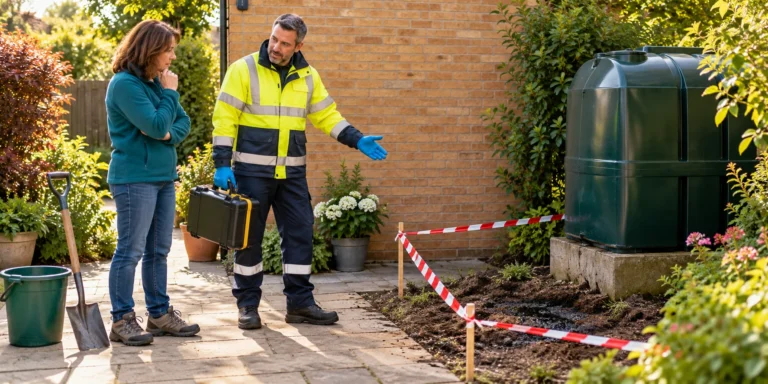
The first task is to prevent further release and address immediate concerns. The second is to establish where the escaped oil went. These tasks are connected, but they should have separate records and responsibilities. Ask the person managing the response to confirm both the repair and the environmental follow-up.
For example, replacing a failed fitting may resolve the mechanical fault while leaving questions about soil beneath it. Conversely, removing stained soil without repairing the fault could allow the same problem to recur. A complete plan should connect the source repair with the investigation and the proposed cleanup.
Do not use the amount remaining in the tank as the sole basis for estimating the spill. Ask how any estimate was developed and which uncertainties remain. A delivery record, a level observation and a photograph may each help, but none automatically establishes when a leak began or exactly how much escaped.
Understand the routes that matter at your property
Land-contamination assessment uses the relationship between a source, a pathway and a receptor: what is present, how it could travel, and what could be affected. The LCRM risk-assessment guidance describes developing and updating this conceptual understanding as information becomes available. [1]
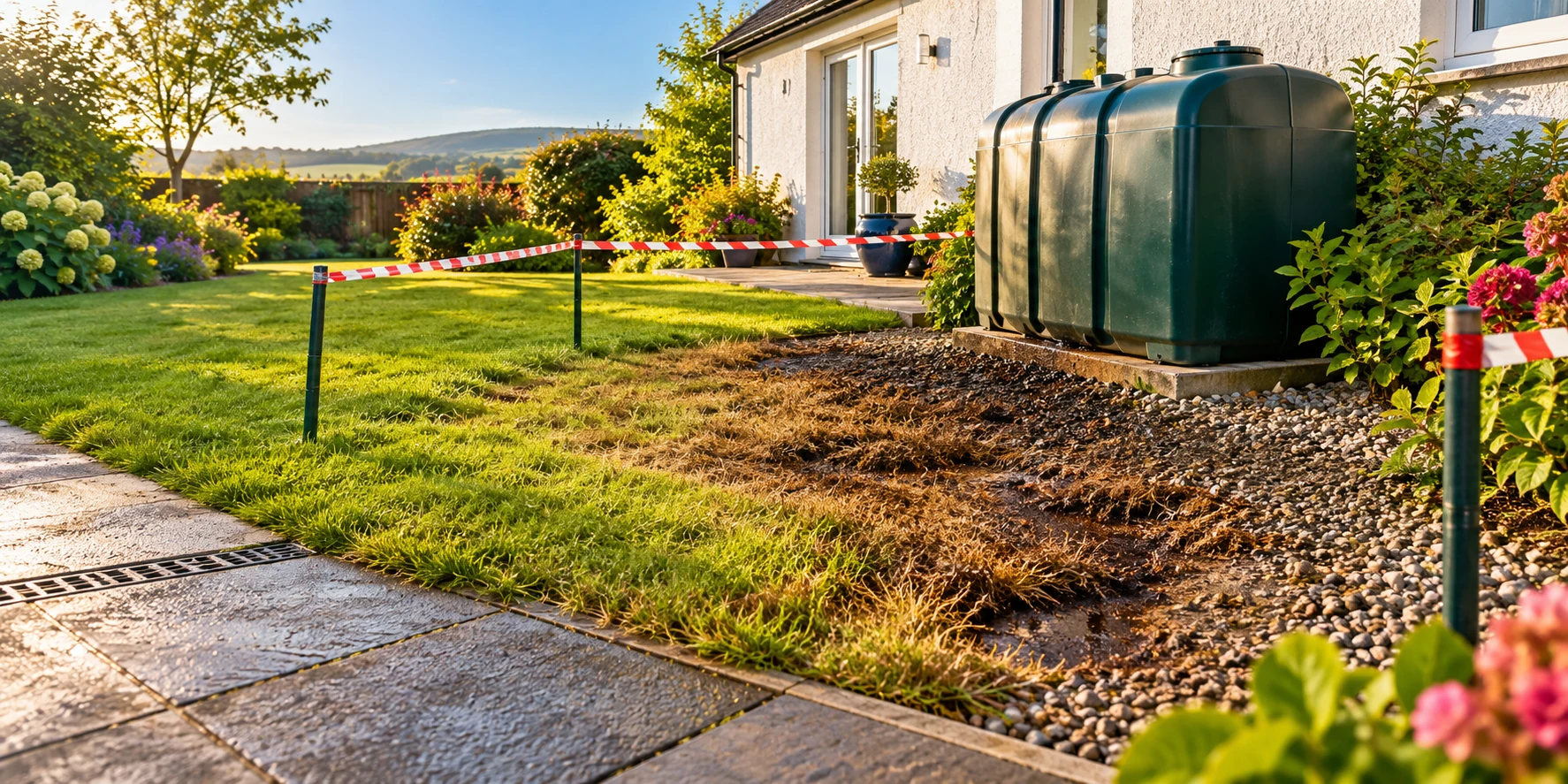
For a homeowner, the practical question is which routes the investigator has considered. These might include ground beside the tank, service trenches, building interfaces, drains or nearby water. Ask for a plan that shows confirmed observations and suspected routes separately. A diagram should clarify the evidence rather than make an uncertain boundary look exact.
The route matters because the most obvious area may not be the only relevant one. Ask why investigation stops where it does and what supports that decision. Equally, ask what would justify extending it. The aim is an evidence-led enquiry, not indiscriminate digging across the whole property.
Recognise that different concerns need different evidence
A household air concern, an affected water supply and contaminated soil do not necessarily share one completion test. The investigation should identify which decisions need to be made and what evidence will support each of them.
| Concern | Question for the cleanup team |
|---|---|
| An active source | What confirms the release has stopped? |
| Indoor conditions | What advice and evidence address occupation? |
| Soil or buried materials | How was the affected extent investigated? |
| Water or drainage | Which routes and receptors require attention? |
| Completed work | What records demonstrate the agreed objectives? |
UKHSA identifies inhalation, ingestion and skin contact as possible exposure routes for kerosene. [2] This does not mean everyone near a spill has received a harmful dose. It means that an assessment should address plausible exposure, with appropriate professional advice where health or occupation is in question.
Do not deliberately handle, smell or disturb material to establish whether it is affected. Give the investigator observations already available from safe, ordinary use of the property. If circumstances worsen, report the change promptly rather than waiting for the next scheduled visit.
A recent spill is not simply a historical-land exercise
LCRM's introductory guidance distinguishes a new pollution incident from the assessment of historical contamination. It calls for prompt, reasonable efforts to remove contamination as far as practicable and restore conditions; any residual contamination needs an appropriate, justified approach with the regulator where relevant. [3]
That distinction matters when someone proposes leaving material in place because a generic screening value has been met. Ask what framework applies to the recent incident, what has been removed or treated, what remains and why the proposed outcome is appropriate. Do not assume that a screening comparison automatically settles the entire response.
At the same time, “cleanup” should not be presented as a promise to remove every detectable molecule regardless of feasibility or consequences. Ask for defined objectives, a reasoned method and an honest statement of limitations. Responsible decision-making requires both action and a defensible explanation of the endpoint.
Why waiting for the smell to fade is insufficient
Odour is an observation, not a complete map of contamination. A change in smell may be relevant, but the team still needs to explain the source and pathways under investigation. Ask what evidence supports the conclusion beyond somebody's impression on one visit.
If natural processes or treatment are proposed as part of the response, ask how progress will be measured, what timeframes are assumptions and what will happen if progress is inadequate. “It will weather away” is not a monitoring plan. The explanation should identify responsibilities and a decision point for reviewing the method.
This is particularly important where temporary measures affect what occupants notice. Ask whether ventilation, coverings or restricted access are controls being relied on, and what must happen before they can be removed. A more comfortable room and a completed remediation project may be different milestones.
Choose a method that answers the actual problem
Removal is one possible component of cleanup, but a quoted excavation volume does not by itself explain the objective. Treatment, containment and other measures may also be considered by competent specialists. Ask why the proposed approach suits the evidence, access constraints and receptors at the property.
The LCRM options-appraisal stage addresses choosing suitable remediation options against defined objectives. [4] The useful homeowner question is not simply “Which method is best?” but “Why is this method appropriate here, and how will we know it worked?” A sound explanation should include the circumstances that would require it to change.
Request a scope that connects investigation, work, waste management and reinstatement. If a quote only covers removal, ask who is responsible for testing the excavation, managing any water, restoring the area and reporting completion. Those interfaces are easy to overlook when tasks are commissioned separately.
Plan the evidence before the area is closed up
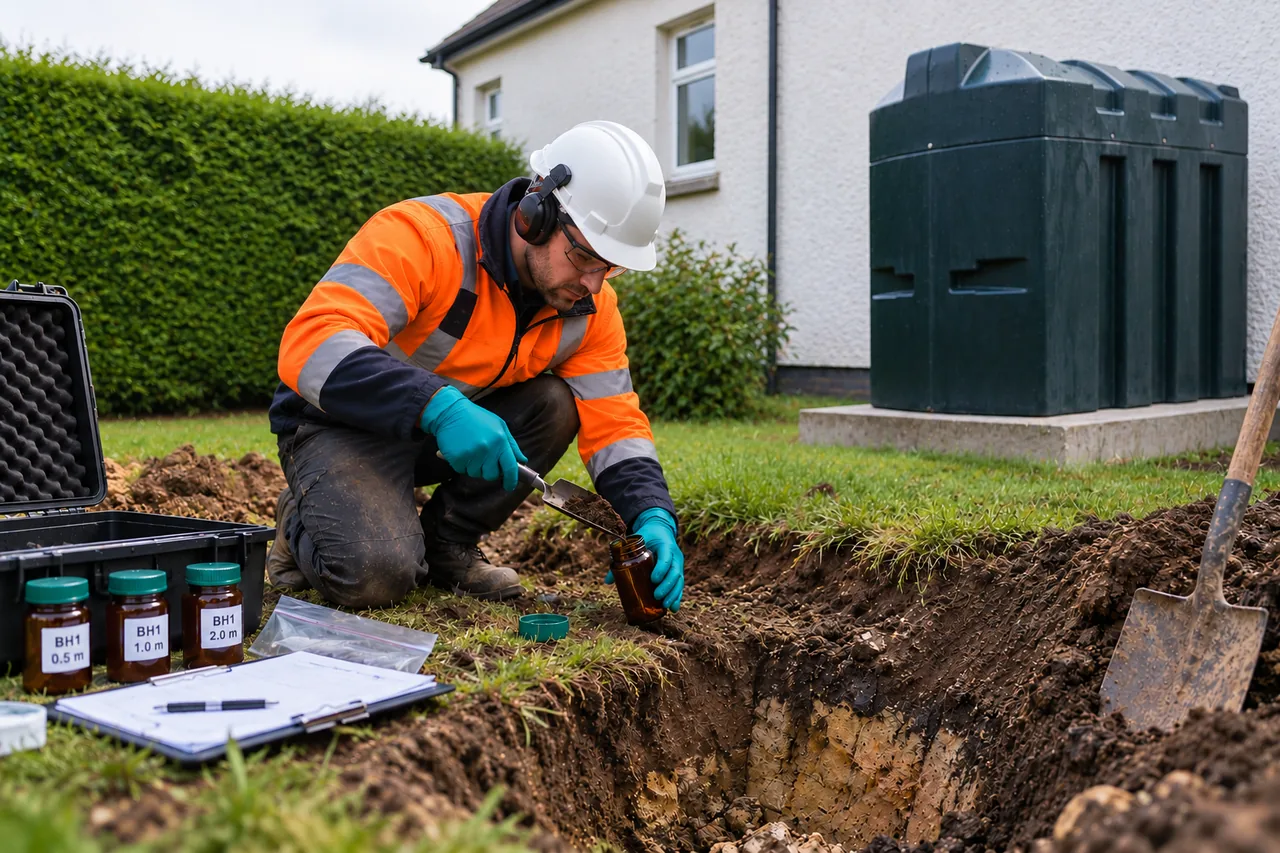
Ask what records will be made while affected areas are accessible. Photographs, locations, sample identifiers and work logs can be much more useful when they are planned than when somebody tries to reconstruct the sequence later. Identify any point at which backfilling or rebuilding must wait for a review.
A useful completion account explains what was found, what was done, what changed from the original plan and which evidence supports the conclusion. It should also identify any remaining work or restrictions. A stack of laboratory certificates without interpretation can leave the homeowner with the same unanswered questions.
Think ahead to future maintenance. If a pipe route changes, ground is replaced or monitoring points remain, request records that another professional could understand. A clear handover makes it easier to distinguish future problems from the work already completed.
Coordinate the practical and financial decisions
Tell the insurer what is happening and ask which activities are authorised. Keep that funding decision separate from technical advice about necessary action. If there is a dispute about scope or cover, ask the parties to identify the precise issue and who is responsible for resolving it.
Also ask whether environmental reporting or involvement from another authority is required. A property boundary or insurance limit does not define the physical extent of contamination. The investigation should address relevant observations even where responsibility or funding is still being discussed.
For a hypothetical small garden leak, an early inspection might support a limited response. For another incident, the same surface appearance might conceal an affected service route. These are examples of why site evidence matters; neither is a prediction for your home. Avoid choosing a response solely because somebody else's spill looked similar.
Your practical checklist
- Confirm both source repair and environmental follow-up.
- Ask for a plan of confirmed and suspected affected areas.
- Identify decisions about occupants, water, land and buildings.
- Request clear objectives and the reason for the proposed method.
- Agree verification before covering or rebuilding affected areas.
- Keep the final report, waste records and reinstatement information.
Your next step
Ask the lead specialist for a short explanation of the problem, proposed response and completion evidence. Continue with our guides to site assessment and remediation, environmental effects and confirming a successful cleanup.
Related homeowner guides
Sources and further reading
- Environment Agency — LCRM: Stage 1, risk assessment. Technical assessment framework; consider Northern Ireland application.
- UKHSA — Kerosene: general information. Exposure and public-health background.
- Environment Agency — LCRM: before you start. New incidents, professional competence and territorial context.
- Environment Agency — LCRM: Stage 2, options appraisal. Selecting and documenting suitable remediation options.
Sources checked 26 October 2026. The practical questions are editorial guidance; the required response depends on the actual incident and relevant professional and regulatory advice.
Need help with your situation?
If you need help identifying suitable specialist support, tell us what you have observed and the questions you need answered.