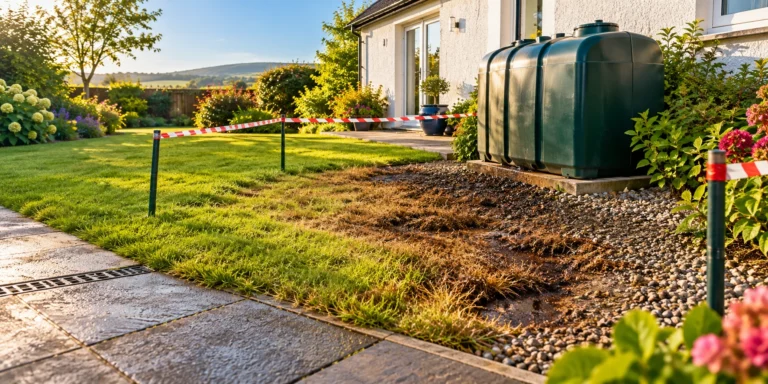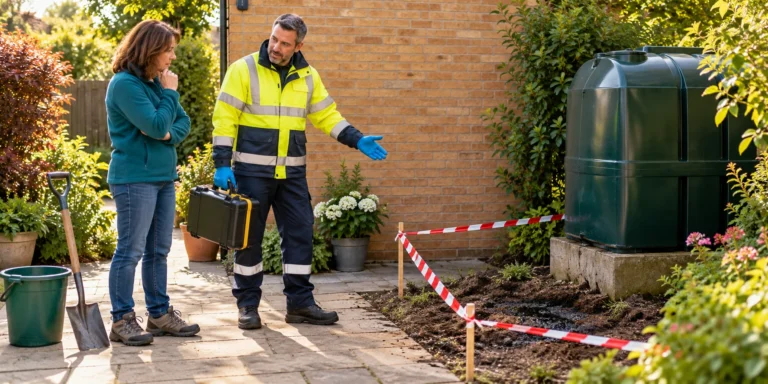

How will my home and garden be restored after an oil-spill cleanup?
The short answer
Restoration should be planned alongside remediation. Agree what will be removed, protected, repaired and replaced, the standard expected, who will pay and who will approve changes. Before affected areas are covered, confirm that the necessary inspections and verification have been completed or that a justified staged arrangement has been agreed. The final handover should address both the environmental work and the quality and function of the restored home and garden.
After excavation or work inside the house, the most visible question is often when everything will look normal again. Good reinstatement starts earlier than the final delivery of soil or flooring. It needs an agreed scope, a sensible sequence and a clear link to the evidence that the cleanup is ready for that next stage.
By Spill-Response Editorial Team · Sources checked: 26 October 2026 · Northern Ireland focus
In this guide
- Record the starting condition
- Agree a written reinstatement scope
- Identify the handover between cleanup and rebuilding
- Specify replacement materials for their intended purpose
- Pay attention to services and building interfaces
- Make the garden scope specific
- Plan internal finishes without hiding unresolved questions
- Inspect the work against the agreed scope
- Keep a complete handover file
- Your practical checklist
- Your next step
- Sources and further reading
Record the starting condition
Ask for a condition record before substantial work begins, where circumstances allow. Photographs and notes should cover the areas likely to be disturbed and the access route: paving, fences, planting, floors, decoration and relevant services. Include existing defects rather than allowing the record to imply that everything was previously new.
Keep your own earlier photographs if they help show the layout or finishes. Identify approximate ages and any receipts or specifications already available. Do not buy replacements or remove evidence simply to speed up the discussion before the scope and funding have been agreed.
If urgent work has already started, record the position as soon as it is safe and ask the contractor to retain its initial photographs. A retrospective record has limitations, but it can still help establish what remains to be restored. Label the date and stage of each image clearly.
Agree a written reinstatement scope
A promise to “put everything back” leaves too much open. Ask for a schedule identifying each affected element, the proposed repair or replacement, the finish and any assumptions. It should explain whether quantities are measured or provisional and which decisions still require approval.
Separate restoration from requested upgrades. You may choose to alter a layout or replace a larger area for consistency, but clarify the extra cost and responsibility. Do not assume an insurer will fund an improvement merely because it is convenient to undertake while the site is open.
The Financial Ombudsman Service's settlement guidance addresses repair quality and the insurer's responsibilities when it elects to arrange repairs. [1] The exact outcome still depends on the policy and circumstances. Obtain the insurer's written position on the agreed restoration, including any disputed matching or replacement issues.
Identify the handover between cleanup and rebuilding
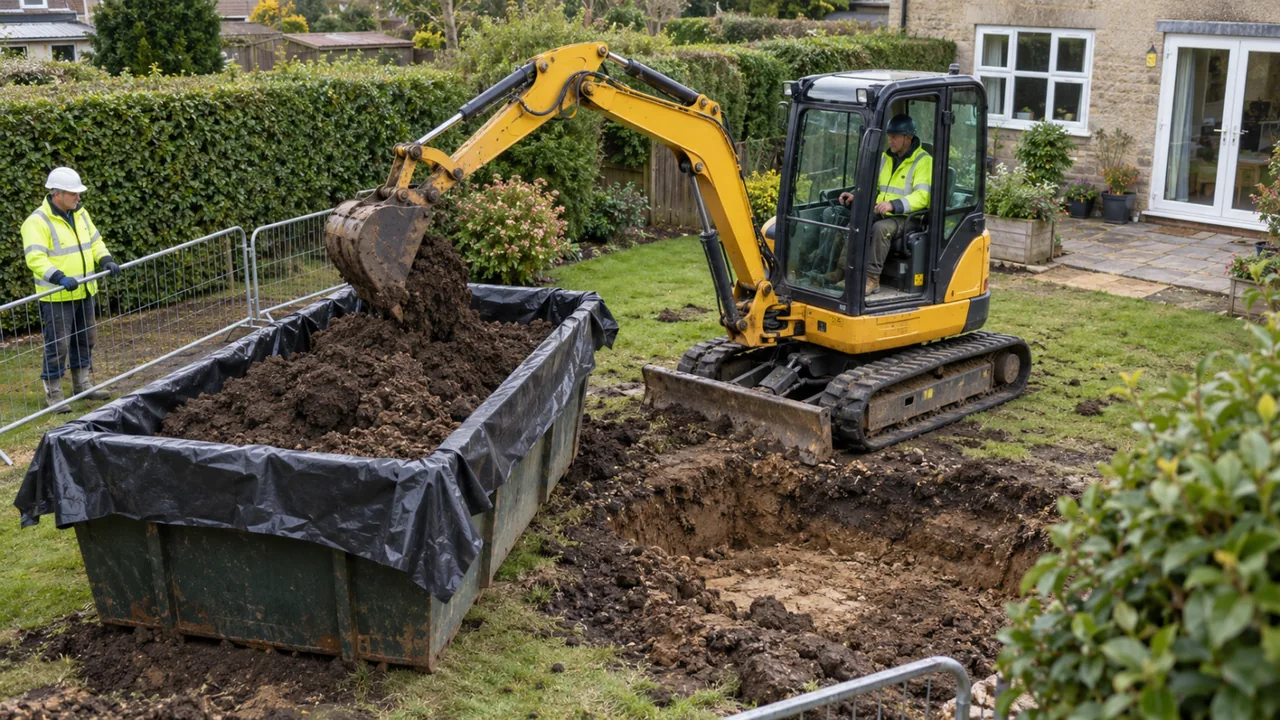
The remediation team and the reinstatement team may be different businesses. Ask who decides that an area is ready to be backfilled, closed or rebuilt, and what information will be passed to the next contractor. A scheduled delivery is not a substitute for that decision.
LCRM describes verification as demonstrating that remediation objectives and criteria have been achieved, supported by the planned evidence. [2] Ask how that evidence will be obtained before work becomes concealed. If a staged approach is proposed, the report should identify the completed stage and the conditions for continuing.
Avoid being placed between two contractors who each assume the other has checked the area. Request a named coordinator and a written release or instruction appropriate to the project. If an unresolved issue is discovered, agree how the schedule and costs will be reviewed before more work covers it.
Specify replacement materials for their intended purpose
Replacement soil, fill and surface materials need to suit the function they will perform. Ask what specification applies, who checks compliance and what delivery information will be kept. Material suitable for one purpose may not be suitable for another simply because it looks clean.
For a garden, discuss the intended use of the area, planting, levels and drainage. For a driveway or structure, ask the appropriate professional about the construction specification and inspection. This article does not provide layer depths or compaction instructions; those decisions depend on the actual design and ground conditions.
Where waste-derived or recycled material is proposed, ask who will confirm its status and lawful use. DAERA's duty-of-care guidance is relevant where the material remains waste. [3] A supplier's description alone should not be expected to answer every environmental and engineering question.
Pay attention to services and building interfaces
A cleanup may involve access around water, drainage, heating or electrical services. Request a record of any changes, the person responsible for the work and the checks required before the service returns to use. Do not assume the environmental contractor has accepted responsibility for every trade.
HSENI's excavation guidance highlights the need to share information about ground conditions and services with those undertaking the work. [4] At a domestic site, that supports a practical question: have the people reinstating the area received the relevant information from the investigation and excavation?
Ask whether a changed pipe route, removed chamber, repaired floor or altered drainage feature should appear in the handover drawings. Photographs taken before covering can also be helpful. They should supplement, rather than replace, any necessary professional inspection or installation record.
Make the garden scope specific
A garden can contain several distinct elements: subsoil, topsoil, lawn, beds, trees, paths, walls, fencing and drainage. Discuss them individually. A single allowance for “landscaping” may leave uncertainty about what is included and the condition expected at handover.
Agree how planting decisions will be made and whether timing affects the work. Ask who is responsible for watering, establishment care and any agreed replacement of failed planting. The answer should distinguish contractor obligations from ordinary household maintenance after handover.
If machinery uses a route outside the excavation area, include that route in the condition review. Ask how damage, rutting or settlement will be assessed and addressed. Do not assume that restoration stops at the outline of the contaminated ground if the agreed work has disturbed other areas.
Plan internal finishes without hiding unresolved questions
Inside the home, agree the sequence for floors, walls, joinery and decoration. Ask whether any relevant inspection, environmental check or building assessment must occur first. A newly decorated room can look complete while another issue remains open, so the handover should identify both appearance and function.
Discuss practical matters such as storage, protection of belongings, access, dust control and which rooms will be unavailable. Keep household needs visible in the programme. If temporary accommodation is involved, ask how the reinstatement schedule affects the accommodation review.
Where existing finishes cannot be matched exactly, raise that early. Request the proposed solution and the insurer's or appointing party's position before materials are ordered. A sample or specification can make the decision concrete and reduce disagreement after installation.
Inspect the work against the agreed scope
| Area | Useful handover check |
|---|---|
| Ground and garden | Levels, intended use, planting and drainage arrangements |
| Surfaces and boundaries | Agreed materials, finishes and access-route repairs |
| Services | Changes, checks, responsible trades and records |
| Interior | Agreed repairs, finishes and outstanding restrictions |
| Environmental work | Verification conclusion and any follow-up |
| Contract | Snags, responsibility, dates and agreed cost changes |
Use a dated snagging list with photographs where safe. Describe the issue precisely: its location, the agreed requirement and the observed difference. “The garden is unfinished” is less useful than identifying which bed, surface or fence section needs attention.
Ask who will respond, what remedy is proposed and when it will be completed. Keep minor finishing items separate from issues that affect safe use or the environmental conclusion. That distinction helps everyone prioritise without treating all outstanding work as equally urgent.
Keep a complete handover file
Request the final scope, approved changes, relevant photographs, verification report, waste records and details of installed or altered services. Include warranties or guarantees actually provided, with their terms and contact details. Do not assume a general promise covers every element indefinitely.
If monitoring or maintenance continues, record who owns that task and what access is needed. A restored surface should not accidentally conceal a monitoring point that still needs to be used. Ask how ongoing requirements fit with normal use of the home and garden.
A useful hypothetical example is a finished lawn with a small area awaiting a final service repair. The handover should identify that exception, its responsible party and the expected next step. A clear partial handover is more useful than a vague claim that everything is complete.
Your practical checklist
- Keep a dated record of the original condition and access route.
- Agree the scope, specification, funding and change process.
- Identify verification and inspection hold points before covering work.
- Obtain records for replacement materials and altered services.
- Review the finished work against the agreed schedule.
- Record snags, responsibilities and dates in writing.
- Retain environmental and reinstatement records together.
Your next step
Ask for the reinstatement schedule while remediation planning is still underway. Read our guides to cleanup completion, comparing quotations and costs you may have to pay.
Related homeowner guides
Sources and further reading
- Financial Ombudsman Service — Settling home insurance claims. UK approach to settlement and repair complaints.
- Environment Agency — LCRM: Stage 3, remediation and verification. Technical verification framework; consider Northern Ireland application.
- DAERA — Duty of care. Northern Ireland waste responsibilities where applicable.
- HSENI — Example method statement for excavations. Sharing site and service information within managed work.
Sources checked 26 October 2026. The reinstatement checklist is editorial guidance, not a construction specification or determination of insurance entitlement.
Need help with your situation?
If you need help identifying suitable specialist support, tell us what you have observed and the questions you need answered.