Oil spill cleanup starts with understanding the spill.
Oil spill cleanup is not simply a matter of washing or digging. The right method depends on what was released, where it travelled and what must be protected.
An investigation-led plan can target the real contamination and avoid unnecessary disruption. Many previous customers have been advised to use soapy water or detergent with a hose to wash the problem away…..please don’t do this.
Affected areas
Different places need different responses
Use these routes to understand the likely questions, risks and professional input.
SOIL
Contaminated soil and gardens
How oil moves below ground, how affected areas are defined and the available remedies.
Oil spill cleanup: five stages from assessment to verification
A proportionate process should explain what is known, what is uncertain and how success will be demonstrated.
01
Initial response
Control the source, prevent further spread and identify sensitive receptors.
02
Investigation
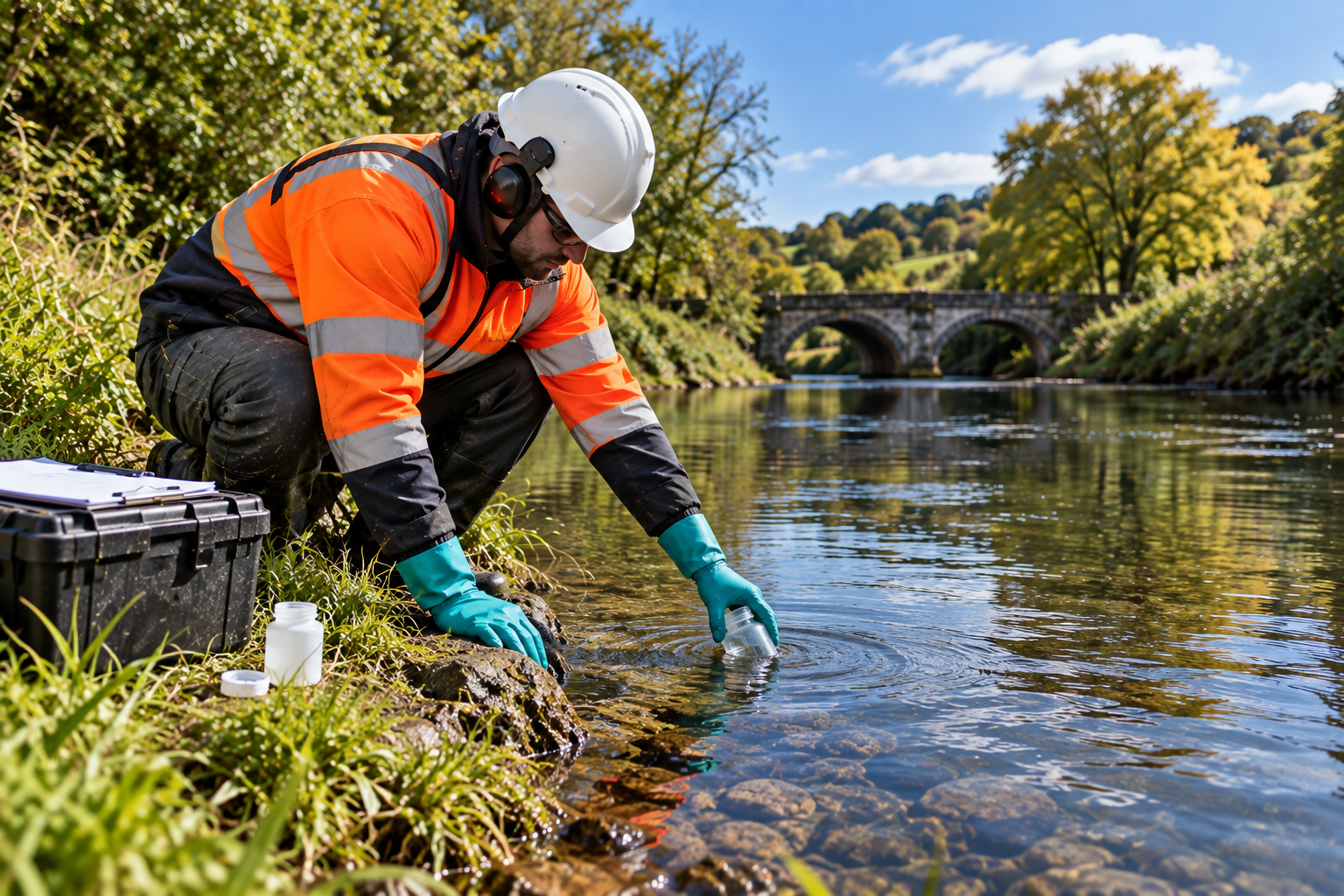
Use observations, sampling and site information to define the problem.
03
Remediation plan
Select a practical method with clear objectives, controls and responsibilities.
04
Treatment or removal
Excavate, recover, treat, contain or monitor contamination as appropriate.
05
Verification
Document the work and use evidence to show whether objectives were met.
Make good decisions
Know the boundaries of a homeowner clean-up
Small safe actions can help, but technical work should be planned and delivered by competent people.
YOU CAN
Preserve evidence
Photograph safely, note dates and retain invoices, correspondence and call records.
YOU CAN
Prevent access
Keep people and animals away from affected areas while advice is obtained.
AVOID
Unplanned excavation
Digging a trench or sump can be useful if done in the correct way as it will slow down migration of spilled oil. However, excavations should avoid ruining evidence, utilities and must be done in a way that doesn’t expose a pathway to a deeper receptor such as groundwater.
AVOID
Washing or dispersing oil
Water and detergents can move contamination into soil, drains or water.
SPECIALIST
Environmental assessment
A consultant can define pathways, risks, sampling needs and objectives.
SPECIALIST
Spill clean-up contractor
A contractor can deliver containment, recovery, excavation or treatment.
Plan the recovery
Get the right expertise around the problem.
Tell us about the source, affected area and current status. We can help route you towards an independent specialist who can assess and contract with you directly.
Ask the specialist to explain the proposed oil spill cleanup in writing. Which areas will be investigated, what access is needed, and how will the work protect nearby buildings, drains and neighbouring land? Request a clear account of what is included, what remains uncertain and which findings could change the scope.
Keep the investigation report, agreed scope, photographs and completion evidence together. Ask what results will demonstrate that the objectives have been met and whether monitoring or further work may be needed. A clean-looking surface alone does not explain what is happening below ground.
For Northern Ireland, nidirect’s oil-spill guidance explains the need for specialist environmental contractors. For immediate action, use our emergency guide before arranging planned work.
Illustrative sampling scene; the investigation needed depends on the site.
Manage Consent
We use necessary cookies to make Spill-Response work. With your permission, Google Analytics helps us understand how the site is used, and embedded YouTube videos may use cookies. Choose Accept, Deny or View preferences. You can change your choice later using Manage consent.
Functional
Always active
The technical storage or access is strictly necessary for the legitimate purpose of enabling the use of a specific service explicitly requested by the subscriber or user, or for the sole purpose of carrying out the transmission of a communication over an electronic communications network.
Preferences
The technical storage or access is necessary for the legitimate purpose of storing preferences that are not requested by the subscriber or user.
Statistics
The technical storage or access that is used exclusively for statistical purposes.The technical storage or access that is used exclusively for anonymous statistical purposes. Without a subpoena, voluntary compliance on the part of your Internet Service Provider, or additional records from a third party, information stored or retrieved for this purpose alone cannot usually be used to identify you.
Marketing
The technical storage or access is required to create user profiles to send advertising, or to track the user on a website or across several websites for similar marketing purposes.