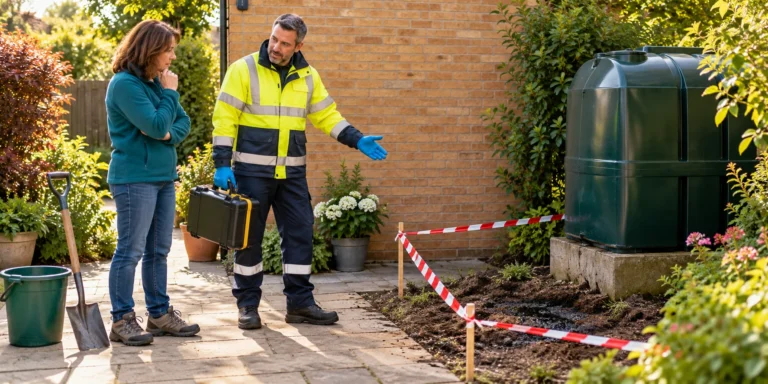

How long will an oil-spill cleanup take?
The short answer
There is no reliable standard duration for every domestic heating-oil spill. The extent, affected materials, access, chosen method, water or building issues, verification and reinstatement all influence the programme. Ask for a staged estimate that distinguishes immediate response, investigation, remediation, evidence review and restoration. It should identify assumptions, the next decision and the circumstances that could change the date. A contractor finishing excavation is not necessarily the same as the property or claim being complete.
A cleanup programme can be difficult to understand when visits, laboratory results, insurer decisions and building work happen on different schedules. The most useful answer to “How long?” is a sequence of milestones with clear dependencies. A single promised finish date can hide the questions that still need to be resolved.
By Spill-Response Editorial Team · Sources checked: 26 October 2026 · Northern Ireland focus
In this guide
- Define which finish date you need
- Investigation changes what can be estimated
- The chosen method affects the sequence
- Use a milestone table rather than a vague promise
- Understand the difference between waiting and inactivity
- Waste arrangements can affect removal dates
- Keep insurer decisions visible
- Agree an update rhythm that helps the household
- Do not close the programme at the last site visit
- Your practical checklist
- Your next step
- Sources and further reading
Define which finish date you need
Start by separating the household milestones. You may need to know when an active leak will be controlled, when a room can be used, when machinery will leave, when the garden will be restored or when the final report will arrive. Those events may not happen together.
Ask the lead contact to name each milestone and its conditions. For example, returning to a room may depend on technical advice about occupation and essential services. Closing an insurance claim may depend on final costs and documentation. Neither should be inferred simply from a date on a contractor's work schedule.
A clear programme also shows who makes the decision. If a laboratory result is needed, identify who interprets it. If an insurer must authorise further work, identify who requests that decision and when. This reduces the familiar situation in which every party says it is waiting for somebody else.
Investigation changes what can be estimated
Early in an incident, the extent may be uncertain. The team may need access, records, sampling or specialist input before selecting the main response. A preliminary estimate should say what it assumes rather than presenting uncertain quantities as a fixed project.
Ask what the next investigation will resolve. Will it clarify the affected boundary, the condition beneath a floor, a water concern or the route along a service trench? A useful answer links the activity to a decision, allowing you to see why it affects the programme.
If new evidence changes the scope, request a revised explanation and schedule. A change is not automatically evidence of poor planning: some concealed conditions cannot be confirmed immediately. However, the team should distinguish a genuine new finding from an avoidable coordination problem and explain how it is being managed.
The chosen method affects the sequence
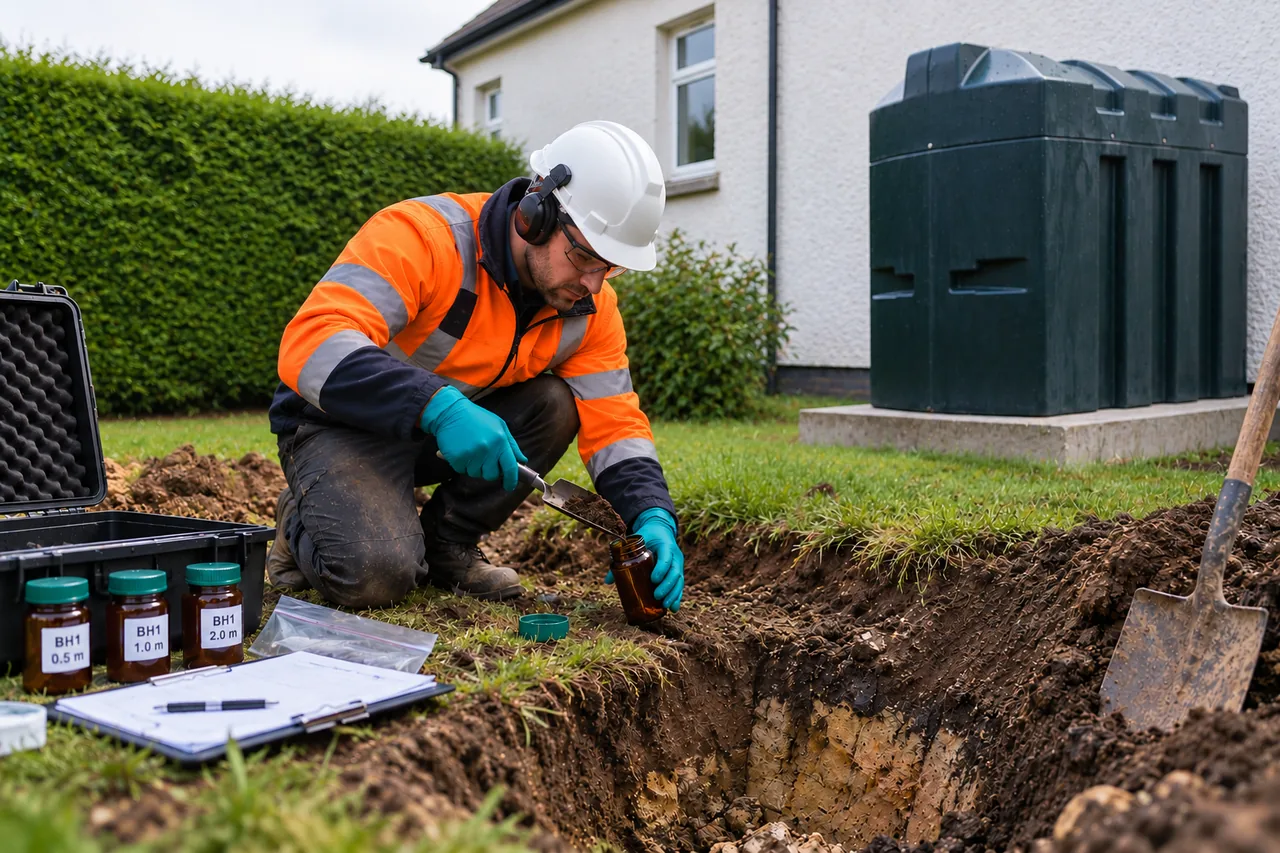
Different remediation approaches have different practical requirements. Ask which activities happen once, which may be repeated and which depend on performance over time. If treatment is proposed, the programme should identify how progress will be judged and when the approach will be reviewed.
LCRM's options-appraisal guidance connects the selection of a method with the remediation objectives and practical assessment of options. [1] A method should not be selected solely because its advertised duration sounds attractive. Ask what that estimate assumes about your site and what evidence supports its suitability.
For an excavation-led response, ask about access, services, support requirements, removal arrangements and checks before backfilling. For a treatment-led response, ask about equipment, monitoring, operating conditions and the decision to stop or change treatment. These are programme questions for the specialist, not instructions for the homeowner to manage the method.
Use a milestone table rather than a vague promise
| Stage | Useful question about timing |
|---|---|
| Immediate response | What must happen now, and who is attending? |
| Investigation | What question will the next visit or result resolve? |
| Main remediation | Which assumptions underpin the duration? |
| Verification | What evidence is needed before the next stage? |
| Reinstatement | What must be approved before work is covered or rebuilt? |
| Handover | When will reports, records and outstanding actions be provided? |
Ask for dates where they can reasonably be given and dependencies where they cannot. “Awaiting results” is incomplete without the sample date, expected reporting position and person responsible for review. The exact turnaround must come from the appointed laboratory or contractor, not a generic online estimate.
Keep the programme proportionate. A domestic project does not always need a complicated project-management document. A short table with named contacts, current dates and decisions can be enough if it is kept accurate and shared with everyone who needs it.
Understand the difference between waiting and inactivity
A pause may be necessary while evidence is reviewed or a technical decision is made. Ask what is being awaited, whether temporary controls remain effective and when the position will next be checked. A justified pause should have an explanation and a responsible person.
LCRM includes verification reporting and, where required, longer-term monitoring or maintenance within the remediation process. [2] This means the period after visible site work can still contain necessary tasks. It does not justify leaving a homeowner without a programme or an explanation of the outstanding decision.
Ask whether some activities can proceed safely while another is pending. Conversely, ask which work must not proceed yet because it would conceal evidence or create rework. The specialist should coordinate that sequence; the homeowner should not be pressured to choose between a quick finish and an unexplained technical concern.
Waste arrangements can affect removal dates
Before relying on a lorry booking, ask whether the material has been adequately described and accepted by the proposed destination. If more information is required, establish who is obtaining it and how it affects the schedule. A provisional removal date should be labelled accordingly.
DAERA's hazardous-waste guidance describes controls over movement from production towards recovery or disposal. [3] Where those controls apply, the relevant arrangements are part of the job, not paperwork to invent after the load has left. Ask the contractor to include them in its planning.
If conditions or classification change, the route may need reviewing. Ask whether the revised programme reflects that change and whether temporary storage remains appropriate. Do not agree to an unexplained alternative destination merely to keep the original finish date.
Keep insurer decisions visible
Ask which parts of the programme are authorised and which are awaiting a coverage or cost decision. The technical team and claims handler should be able to identify the outstanding request, the information needed and the person considering it. “Insurance delay” is too broad to guide the next action.
The FCA's claims rules require prompt and fair handling within their scope. [4] If a decision appears stalled, request a clear update against the specific outstanding matter. Keep the record factual: when the information was supplied, what was requested and how the delay affects the household or work.
Do not assume every pause is caused by the insurer, or that authorisation alone makes the site ready for the next activity. The programme should show both administrative and technical dependencies. If urgent protection is required, explain that separately from the longer approval process.
Agree an update rhythm that helps the household
Ask for a regular update suited to the pace of the project and an immediate notification if a significant date changes. Each update should say what has been completed, what is next, what is blocked and what the household needs to do. Repeating a previous estimated finish date without addressing changed conditions is not a useful update.
Plan around confirmed information where possible. Tell the team about access restrictions, work commitments, care responsibilities and temporary accommodation dates. Ask which household arrangements need flexibility and which decisions can now be made with confidence.
If you receive a revised duration, ask what caused the change and whether other milestones are affected. For example, a delayed final surface finish may have different implications from an unresolved occupation assessment. Treat the specific consequence rather than assuming every extension means the home remains unusable.
Do not close the programme at the last site visit
The final report and records should have their own due date. Request the verification conclusion, waste documentation, reinstatement handover and any follow-up plan. If an item is outstanding, obtain the responsible person and expected next step in writing.
A hypothetical project might have completed physical works while laboratory interpretation and the final report remain open. Another might permit normal occupation while landscaping is scheduled later. Both examples show why a single label such as “finished” can be misleading without defined milestones.
Keep the latest agreed programme with the completion file. It can explain the sequence of decisions and any changes made during the work. Once the evidence supports closure, ask the lead professional and insurer to state clearly which matters are resolved and which, if any, continue.
Your practical checklist
- Separate occupation, site work, restoration and claim milestones.
- Ask for assumptions and dependencies behind each estimate.
- Identify who reviews results and authorises the next step.
- Request an explanation and review date for pauses.
- Keep technical and funding decisions visible.
- Include final reports and follow-up in the programme.
Your next step
Request a short milestone schedule and a named lead contact. See our guides to site assessment and remediation, the loss adjuster's visit and completion evidence.
Related homeowner guides
- How will my home and garden be restored after an oil-spill cleanup?
- Can I stay in my home during an oil-spill cleanup?
Sources and further reading
- Environment Agency — LCRM: Stage 2, options appraisal. Technical framework for selecting options.
- Environment Agency — LCRM: Stage 3, remediation and verification. Verification and any required monitoring; consider Northern Ireland application.
- DAERA — Hazardous waste. Northern Ireland movement controls where applicable.
- FCA Handbook — ICOBS 8.1. Applicable UK claims-handling requirements.
Sources checked 26 October 2026. The milestone framework is editorial guidance. No standard duration or guaranteed completion date is implied.
Need help with your situation?
If you need help identifying suitable specialist support, tell us what you have observed and the questions you need answered.