
How do I know my property has been cleaned up properly?
Knowledge Hub / Cleanup and remediation
The short answer
Oil spill cleanup verification means checking the evidence that the agreed remediation objectives have been achieved. That normally means a clear explanation of the original contamination, the work completed, the testing or monitoring used to check it and any restrictions or further work that remain. A tidy garden, an improved smell or a paid invoice cannot provide that evidence on its own.
In this guide
- Agree what “finished” means before work begins
- Separate cleanup, reinstatement and the insurance settlement
- Look for a clear account of where the oil went
- What evidence should follow excavation?
- What if the soil was treated in place?
- Do the laboratory results prove the site is safe?
- Does every trace of oil have to be removed?
- What should the completion report contain?
- Who has checked or accepted the work?
- What if I can still smell oil?
- Keep the records for the property’s future
- Your completion checklist
- If you would like some help
- References and further reading
After the disruption of an oil spill, it is understandable to want the last work van gone and everyday life back. You may also have a lingering question: how do I know the problem has actually been dealt with?
You should not have to become an environmental scientist to understand the answer. The person responsible for the assessment should be able to explain what was found, what was done and why the evidence supports completion.
The key document is often called a verification report or validation report. The name matters less than the substance: it should connect the work and the results to the objectives for your property.
Agree what “finished” means before work begins
Completion should be planned at the start. If the aim is only described as “clean up the oil”, different people may have different expectations about the ground, building, testing and final condition.
Ask for the objectives in writing. They should relate to the actual risks and affected parts of the site. A project might need to address contaminated soil beside a building, vapour entering occupied rooms, a route towards groundwater or more than one of these together.
The Environment Agency’s LCRM guidance on remediation and verification sets out a planned, evidence-based approach: establish objectives, implement the work and demonstrate what it achieved. It also provides for monitoring and maintenance where needed. This is technical guidance, not a claim that every provision is a statutory duty for every Northern Ireland domestic spill.
Ask how the approach will be applied to your site and which local authorities need to be involved. Our assessment and remediation guide explains the overall process in plain English.
Separate cleanup, reinstatement and the insurance settlement
These are related, but they answer different questions.
Cleanup addresses the contamination and its unacceptable effects or risks. Reinstatement concerns the condition in which disturbed areas are left, such as paving, floors and planting. Insurance settlement concerns the claim and the agreed financial arrangements.
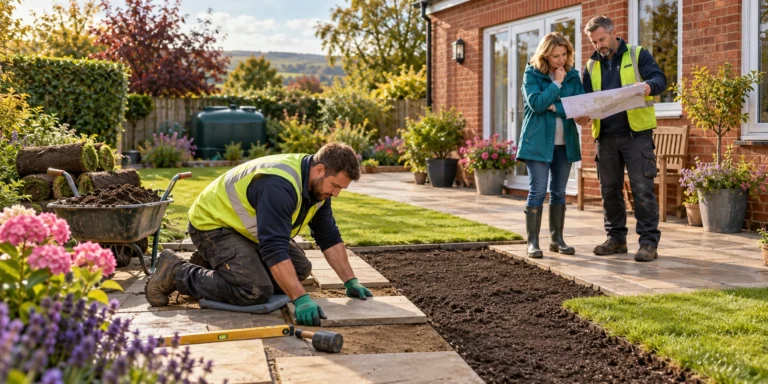
A newly laid lawn can look complete while a report is still outstanding. Equally, the contamination work may have met its objectives while a damaged surface still needs reinstatement. Ask for the status of each part rather than relying on a single statement that the job is finished.
Make a separate snagging list for reinstatement. That helps prevent a discussion about paving or decoration from obscuring an unresolved environmental question, or vice versa.
Look for a clear account of where the oil went
The final report should give a reader enough context to understand the work. It should identify the source, the affected areas and the routes by which oil or vapours could reach people, water, buildings or neighbouring land.
A plan is particularly helpful. Ask for one that shows the tank, relevant buildings and services, investigation locations and areas treated or excavated. Sample locations and depths should be traceable to the results.
The report should also explain important limitations. If an area beneath a building could not be directly investigated, how was it assessed? If the spill approached a boundary, what evidence was used to consider the land beyond it?
You are not looking for an investigation with no uncertainty whatsoever. You are looking for a reasoned explanation of how the relevant uncertainties were addressed and whether any affect the conclusion.
What evidence should follow excavation?
Where contaminated soil has been removed, the evidence may include records of the excavation, photographs, sampling from remaining ground and laboratory results interpreted against the agreed criteria.
The important question is what has been demonstrated about the material left behind. Records showing that several loads went to a waste facility describe removal; they do not, by themselves, establish the condition of the remaining site.
Ask whether the sampling addresses the relevant sides, base and other areas of concern. There is no universal number of samples that proves every excavation is adequate. The design should reflect the extent of the work, the ground conditions and the question being answered.
For example, a result from one convenient corner would need explanation if the original concern involved a different boundary beside the house. A sample has value because of where it came from and what it helps establish, not simply because it was analysed by a laboratory.
What if the soil was treated in place?
Some projects treat contamination without removing all the affected material. The evidence then needs to show how the chosen method performed and whether it achieved the agreed outcome.
Depending on the treatment and the site, this may involve repeated soil, water or vapour measurements, system-performance records and observations over time. A machine being removed from the site does not automatically demonstrate that the treatment objective has been achieved.
Ask what the stopping criteria were and how the results meet them. If monitoring continues after active treatment, establish whether the project is complete subject to defined monitoring or whether verification is still in progress.
Those are different positions. Both can be described clearly without leaving you to interpret an open-ended statement that things are “looking better”.
Do the laboratory results prove the site is safe?
Laboratory results provide measurements. The environmental assessment explains what those measurements mean at the property.
Check that the report connects each result to a location, depth or sampling event and explains why the tests were suitable for the fuel and the problem being assessed. A laboratory certificate alone cannot decide whether you can occupy the house or use the garden normally.
Our guide to sampling, laboratory results and monitoring explains two distinctions that often cause confusion.
First, “not detected” does not mean that absolutely none of a substance exists. It means the laboratory did not report it above the applicable threshold. The assessor needs to consider whether the method and reporting limits are suitable for the decision.
Second, a screening value and a cleanup target are not always the same thing. Screening can identify a need for further assessment. The final remediation criteria should relate to the site and the relevant exposure or environmental pathway.
If a table uses terms such as TPH, screening criteria or reporting limit, ask for a short explanation beside the conclusion. You should not have to guess why a particular comparison was used.
Does every trace of oil have to be removed?
Not necessarily. The aim of a risk-based remediation project is to address unacceptable risks appropriately for the use of the site. In some circumstances, residual contamination may remain with a justified assessment, controls or monitoring.
That should be explained openly in the technical report. Ask where the residual contamination is, what it consists of, why leaving it is considered acceptable and whether that conclusion depends on particular conditions remaining in place.
For example, if a protective measure is part of the solution, the report should explain its purpose and any maintenance or restrictions. If future excavation could disturb affected ground, you need to know before planning a new drain, extension or landscaping work.
Residual contamination is neither automatic proof of failure nor something to dismiss without explanation. The supporting evidence and the continuing arrangements determine what it means for the property.
Our guide to environmental effects and risk assessment gives more background on this distinction.
What should the completion report contain?
For a homeowner or business owner, the most useful report is one that answers the following questions clearly:
- What happened? The source, known history and relevant uncertainties.
- What was affected? The investigation findings and a usable site plan.
- What was the agreed objective? The risks, intended use and criteria the work was designed to address.
- What was done? The treatment or removal work, important changes and the reasons for them.
- How was it checked? Sampling, monitoring, laboratory results and professional interpretation.
- What remains? Any residual contamination, limitations, protective measures or restrictions.
- What happens next? Further monitoring, maintenance, responsibilities and review dates, if applicable.
- What is the conclusion? Whether each objective has been achieved, with any qualifications clearly stated.
Supporting records may include waste documentation, photographs, imported-material information and relevant correspondence. Ask for the final report and its referenced appendices, rather than an isolated summary page with the supporting evidence missing.
Who has checked or accepted the work?
Ask who prepared the report, who reviewed it and what responsibilities each person held. If the same organisation investigated, carried out and verified the work, ask how technical review was managed.
A separate independent review may be useful for a complex site or a specific disagreement. It should address an identified question, rather than being treated as automatically necessary for every spill.
Also distinguish an insurer’s acceptance of a claim from an environmental conclusion and any regulator’s position. If someone says the work has been “signed off”, ask by whom, for what purpose and where that confirmation is recorded.
Do not assume there will be one universal certificate covering insurance, environmental conditions, building repairs and all future uses of the land.
What if I can still smell oil?
Report it. Describe the location, timing and circumstances without repeatedly exposing yourself to investigate it.
An odour observation should be considered alongside the assessment and the other evidence. It should not be dismissed simply because excavation has ended, and it should not be treated as a complete measurement of health risk.
Ask whether the reported smell is consistent with the proposed completion position, whether another source or affected material needs investigation and what advice applies in the meantime. Seek medical advice for symptoms following exposure; the completion-report discussion is not a substitute for medical care.
Keep the records for the property’s future
Save the final investigation and verification reports, plans, important correspondence and any ongoing monitoring or maintenance instructions. Keep a backup somewhere you can retrieve it even if you change email accounts.
These documents may be useful when explaining the incident to a future insurer, buyer, solicitor, lender or contractor. They do not guarantee that every future party will accept the same conclusion, but they provide a much stronger basis for discussion than recollection alone.
For business premises, make sure operational staff know about any controls that affect access, digging, storage or building work. If ownership or management changes, those instructions should remain available with the property records.
Your oil spill cleanup verification checklist
- The source has been addressed and the remediation objectives are clear.
- The report explains what was done and how the outcome was verified.
- Results are linked to plans, locations and a reasoned conclusion.
- Residual contamination and limitations are identified where relevant.
- Any further monitoring has a purpose, responsible person and defined review or stopping criteria.
- Reinstatement and outstanding snags are recorded separately.
- You have copies of the final documents and know whom to contact about concerns.
The question to ask is simple: “Please show me how the evidence demonstrates that the agreed objectives for my property have been met.” A useful answer should leave you understanding both what has been achieved and whether anything still needs attention.
If you would like some help
If you would like help finding a contractor, we can help. Tell us whether you are at the investigation stage, partway through the work or trying to understand the completion evidence.
References and further reading
- Spill-Response: How an oil-spill site is assessed and remediated — investigation, remediation and verification.
- Spill-Response: Understanding oil-spill sampling, laboratory results and monitoring — sampling design, reporting limits, interpretation and monitoring.
- Spill-Response: Environmental effects of a domestic heating-oil spill — risk-based objectives and residual contamination.
- Environment Agency: LCRM Stage 3 — remediation and verification — technical framework for planning and documenting verification; confirm local requirements and regulator involvement for the particular site.
Related guides: heating oil health risks and oil spill cleanup costs you may need to pay yourself.
Spill-Response Editorial Team. General technical information for Northern Ireland readers. This article does not certify an individual property or replace its assessment.