Could an oil spill affect my drinking-water supply?
The short answer
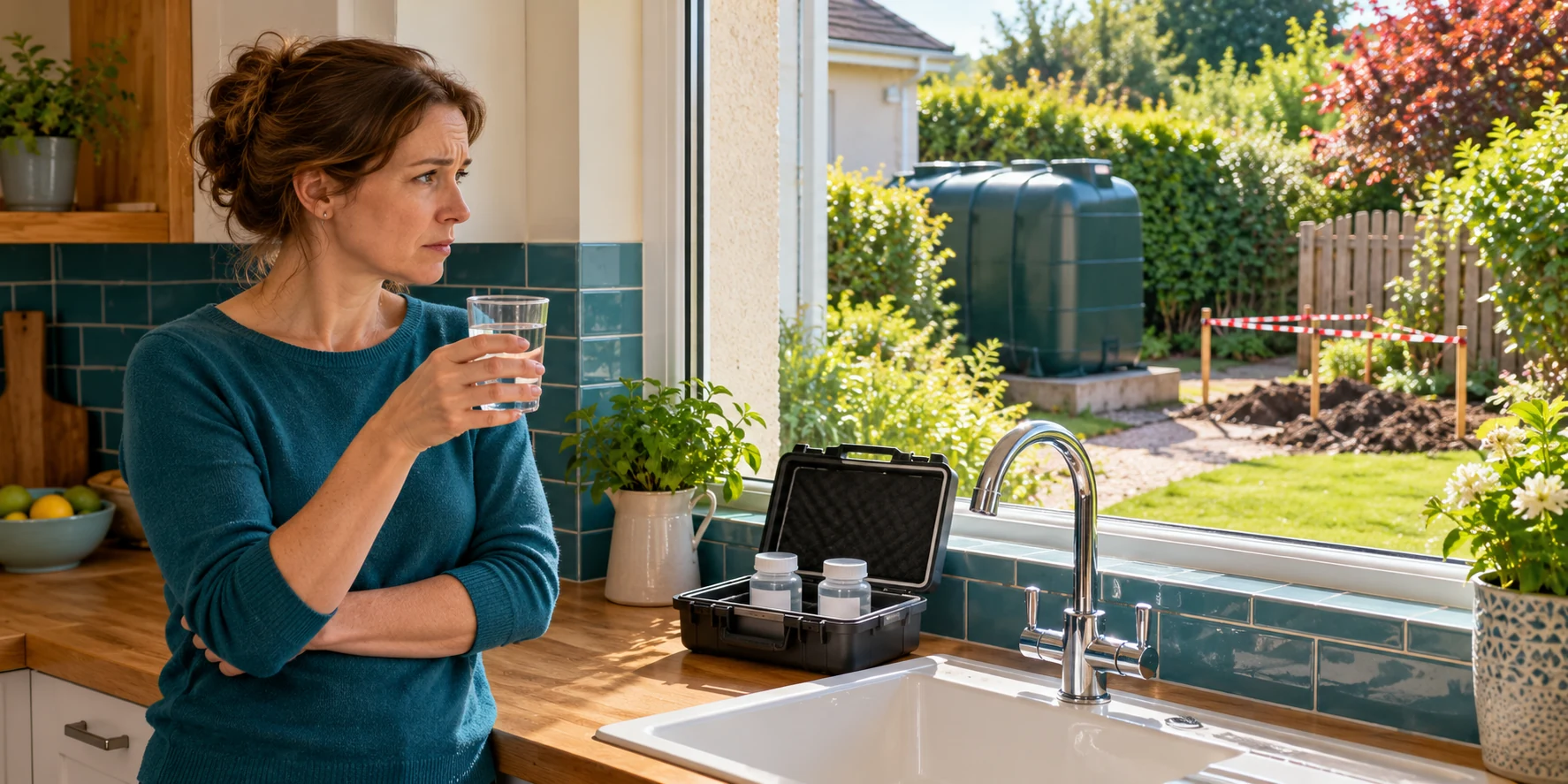
An oil spill can threaten drinking water through contamination of a private source or through contact with vulnerable buried supply pipework. Neither outcome should be assumed from the size of a visible stain alone. If water has an unusual fuel or chemical smell, or contamination is suspected, stop using it for drinking and food preparation while you obtain urgent advice from the supplier or relevant authority. Do not deliberately taste it to investigate. Identify the supply, report the incident and ask for clear instructions on safe uses and an alternative supply.
A heating-oil spill beside a home raises an immediate question: could the water supply be affected? The answer depends on where the oil has gone, how water reaches the property and whether there is a route between the two. A mains connection and a private well require different enquiries.
By Spill-Response Editorial Team · Sources checked: 26 October 2026 · Northern Ireland focus
In this guide
- Establish how your home receives water
- Report a suspected public-supply problem promptly
- Understand why buried pipes matter
- Treat a private source as a complete system
- Ask what the testing will establish
- Keep pollution reporting separate from the water enquiry
- Agree the return to normal use
- Your practical checklist
- Your next step
- Sources and further reading
Establish how your home receives water
Check whether the property uses Northern Ireland Water’s public supply, a private well or borehole, a spring, or a shared private arrangement. If you are unsure, ask the property owner, supplier or person responsible for the system. Do not assume a rural property has a private source, or that a visible pipe represents the whole route.
Make a simple record of what is known: the source location if known, storage tanks, treatment equipment, the approximate incoming pipe route and who else shares it. Label uncertain details as uncertain. This is information for the investigator, not an instruction to open chambers, excavate pipes or enter tanks.
The distinction affects who should be involved. DAERA explains that registered private supplies serving shared domestic or commercial purposes fall within its monitoring arrangements, while a supply to a single dwelling is not subject to the same routine DWI monitoring; the local council may be able to test it. [1] A private source therefore needs an incident-specific response even if nobody routinely visits it.
Report a suspected public-supply problem promptly
Northern Ireland’s official drinking-water guidance identifies fuel or solvent taste and smell as a reason to contact NI Water, including where a spill has occurred near pipework. [2] Use the current contact route on that guidance. Give the address, when the concern began, the affected taps and what is known about the spill.
Describe observations without conducting taste tests. If someone has already noticed an unusual taste, report that fact, but do not ask others to confirm it by drinking. Tell the supplier if the property has storage, a private section of pipe or unusual plumbing arrangements, insofar as these are known.
Ask what water uses should stop, how an alternative supply will be arranged and who will confirm when normal use may resume. Write down the advice and share it with other occupants. A general online article cannot determine whether bathing, laundry or other uses are appropriate in a particular incident.
Do not assume boiling makes chemically contaminated water suitable to drink. Obtain instructions specific to the suspected contaminant. Similarly, flushing taps or replacing a household filter is not a substitute for identifying and correcting the cause.

Understand why buried pipes matter
A spill does not have to reach a reservoir to cause a local problem. The Drinking Water Inspectorate for England and Wales explains that hydrocarbons can contaminate water where affected soil contacts certain plastic supply pipes. The problem may become apparent after a delay, and affected pipework may require replacement rather than flushing alone. [3]
That source describes a technical mechanism. It does not establish that the pipe at your property is affected or transfer England and Wales’ regulatory arrangements to Northern Ireland. Ask the relevant water professional to identify the material, route and condition of the actual pipe and assess the spill in that context.
A clean-looking excavation or the removal of the nearest stained soil does not answer every pipe question. Ask whether the route was checked beyond the visible spill area and whether any replacement specification is suitable for the assessed ground conditions. Decisions about materials and installation belong with competent professionals and the relevant supplier.
Keep the environmental and plumbing investigations connected. A plumber may understand the supply installation while an environmental consultant understands the contamination. Ask who will bring their findings together so that one repair does not overlook the other’s assumptions.
Treat a private source as a complete system
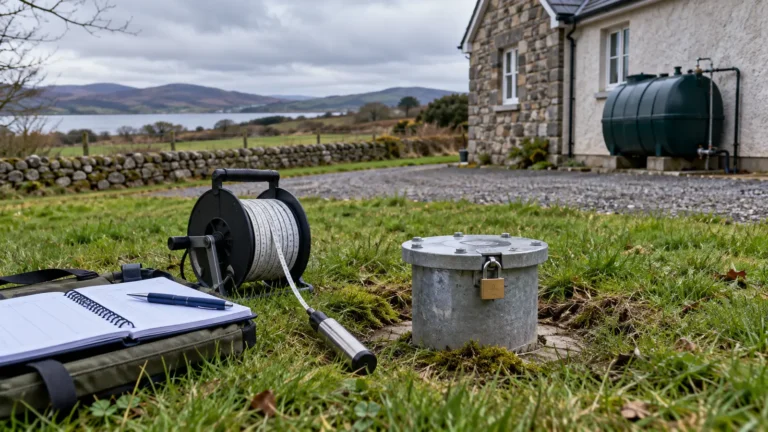
For a private supply, the enquiry should consider the source and the route to the tap, including storage and treatment. DAERA describes private-water risk assessment as considering the system from source to tap. [1] An incident may require information about ground conditions and contamination as well as the condition of the water installation.
Tell the responsible person and relevant authorities about other households or businesses that may use the same source. Do not make assurances on their behalf because your own kitchen tap appears normal. If a supply serves food preparation, visitors or tenants, make that use clear when seeking advice.
Ask what immediate restrictions are recommended, who is organising suitable samples and what analytical work is required for the suspected fuel. A previous routine water test may have checked a different set of parameters. Ask whether it actually addressed the current concern and whether its date is relevant.
There is no universal safe distance from a spill given here. The investigator needs the source location, ground and water conditions, possible pathways and uncertainty about the release. A measurement across the garden alone cannot establish that a well is protected.
Ask what the testing will establish
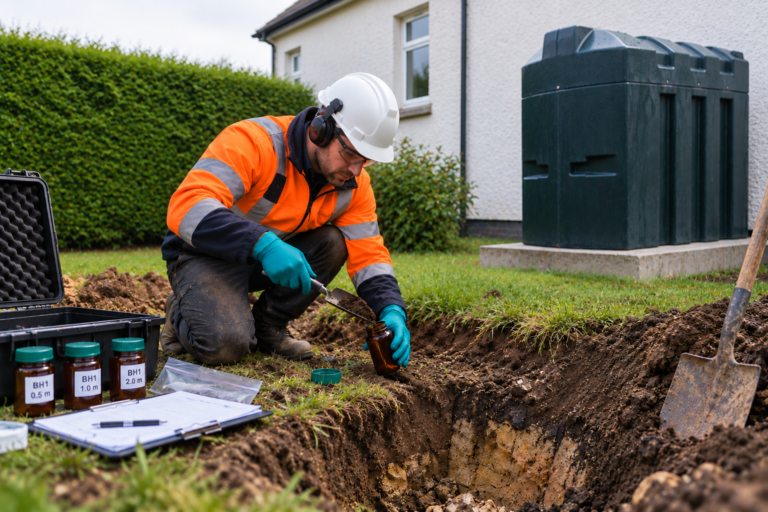
A sampling plan should identify the decision it supports. Testing at a tap, a well, a storage tank and an environmental monitoring point may answer different questions. Ask who will collect the samples, how locations will be recorded and how the laboratory will be told what contamination is suspected.
| Question | Evidence to request |
|---|---|
| Is the supply currently suitable for intended use? | Advice from the responsible water professional and relevant results |
| Could the spill reach the supply? | Investigation of the source, pathways and installation |
| Has a repair addressed the problem? | Repair records and the specified confirmation checks |
| Can restrictions end? | A clear written decision identifying its evidence and scope |
Ask for the original laboratory results and a plain-English interpretation. Check which substances were included and whether reporting limits were appropriate for the decision. A report that says “water sampled” without identifying the location or analytical suite leaves important gaps.
Sampling also has a time dimension. If results describe an early stage of an evolving incident, ask whether follow-up is needed. A single reassuring result should be interpreted within the investigation, rather than being used to dismiss a credible unresolved route to the supply.
Keep pollution reporting separate from the water enquiry
A drinking-water investigation and an environmental pollution report have different purposes. In Northern Ireland, nidirect directs reports of polluted land or water to the Northern Ireland Environment Agency. [4] Tell the relevant responders if a drain, stream, ditch or private source may be involved.
Provide the location and observations you can safely make. Explain that the extent is uncertain if that is the case. You do not need to prove that contamination has reached a watercourse before reporting a reasonable concern and asking for guidance.
Also notify the insurer and the person managing the cleanup. Ask who is coordinating the water-supply issue, environmental investigation and any excavation. Keep reference numbers together so that reports and instructions can be matched to the correct incident.
Agree the return to normal use
Before resuming restricted uses, ask who is giving the decision and precisely which parts of the supply it covers. Has the source been controlled? Were affected components addressed? What tests or inspections support the conclusion? Is further monitoring planned, and who will respond if a problem returns?
Keep records of temporary supply arrangements, sampling, pipe replacement and relevant correspondence. If a new route or material is installed, obtain an updated plan or suitable record. These details may be useful for future work at the property, even after the immediate concern is resolved.
Do not let a completed invoice stand in for a water-quality decision. Equally, do not extend restrictions indefinitely on the basis of an old concern once the responsible professionals have assessed the evidence. The aim is a clear, current instruction that the household can follow.
Your practical checklist
- Identify whether the supply is public, private or shared.
- Report suspected contamination promptly and avoid deliberate taste tests.
- Ask which water uses must stop and how alternatives will be provided.
- Explain known pipe routes, source locations and shared users.
- Request incident-specific sampling and interpretation.
- Obtain clear advice before returning to normal use.
Your next step
Follow the supplier’s or authority’s immediate advice, then ask the cleanup team to record how the water concern is being addressed. Our articles on buried drinking-water pipes, groundwater and who to notify explain the related issues.
Related homeowner guides
- Oil fumes indoors: understanding air testing and results
- What happens if an oil spill crosses my property boundary?
Sources and further reading
- DAERA — Private water supplies. Northern Ireland arrangements and source-to-tap assessment.
- nidirect — Dealing with drinking water problems. Northern Ireland consumer guidance and contact routes.
- Drinking Water Inspectorate — Oil, fuel and other hydrocarbons. England and Wales; technical background on pipe contamination.
- nidirect — Report polluted land and water. Northern Ireland environmental reporting route.
Sources checked 26 October 2026. This article supports practical enquiries; it cannot assess an individual supply or authorise its use.
Need help with your situation?
If you need help identifying suitable specialist support, tell us what you have observed and the questions you need answered.