
Oil fumes indoors: understanding air testing and results
The short answer
Air testing can help investigate oil fumes and assess conditions, but a reading only makes sense alongside the method, substances, units, sampling period and circumstances. Odour, a handheld meter and a laboratory air sample answer different questions. Ask a competent specialist to explain what was measured, why the locations were chosen and what the results mean for the household. Strong fumes or symptoms need prompt attention; do not wait for a routine sampling appointment before seeking appropriate advice.
A strong oil smell can make a home feel impossible to judge. One person notices it immediately; another becomes used to it. An instrument may display a number without explaining which substances were measured. A useful air investigation connects those observations to the source, the building and the people using it.
By Spill-Response Editorial Team · Sources checked: 26 October 2026 · Northern Ireland focus
In this guide
- Start with the source and the occupied rooms
- Understand three different kinds of evidence
- Ask why the samples were taken there
- Read the laboratory report with its explanation
- Check the basis of any comparison value
- Separate present conditions from the completion decision
- Keep a practical record and seek help promptly
- Your practical checklist
- Your next step
- Sources and further reading
Start with the source and the occupied rooms
Tell the investigator where the smell is strongest, when it appeared and whether it changes with heating, weather or ventilation. Describe any recent leak, repair or excavation. Record observations from normal use of the home without entering a contaminated space simply to collect evidence. A short diary can be more helpful than repeated descriptions that the smell is “bad”.
Heating oil is a mixture, and exposure depends on more than the fact that kerosene is present. UKHSA explains that health effects depend on the amount, exposure route and duration, among other factors. [1] The assessment should therefore consider actual circumstances, including who uses the rooms and for how long. A chemical name alone is not a household risk assessment.
Ask whether the source has been stopped and whether contaminated material remains beneath floors, beside walls or near service entries. Testing air while ignoring an ongoing release leaves a central question unanswered. Equally, finding contamination outdoors does not prove that every indoor room is affected.
Understand three different kinds of evidence
An odour observation records what somebody noticed. A screening instrument can help locate changes in its response. A suitably designed laboratory analysis can identify and quantify the substances included in that analysis. These forms of evidence can complement one another, but they are not interchangeable.
| Evidence | What to ask |
|---|---|
| Odour observation | Where, when and under what conditions was it noticed? |
| Handheld screening reading | Which instrument, calibration and response basis were used? |
| Laboratory air result | Which compounds, units and sampling duration does it cover? |
| Written assessment | How do the findings inform the decision for this household? |
For example, a photoionisation detector, often called a PID, responds to a range of chemicals rather than uniquely identifying each one. Its manufacturer describes it as non-selective. [2] A displayed value should not be relabelled as the concentration of a particular fuel constituent without an appropriate technical basis.
Do not compare two contractors' numbers until someone checks that they represent comparable measurements. Different instruments, response factors, sampling periods or units may produce figures that look similar on a page but answer different questions. Ask for the original record and the interpretation together.
Ask why the samples were taken there
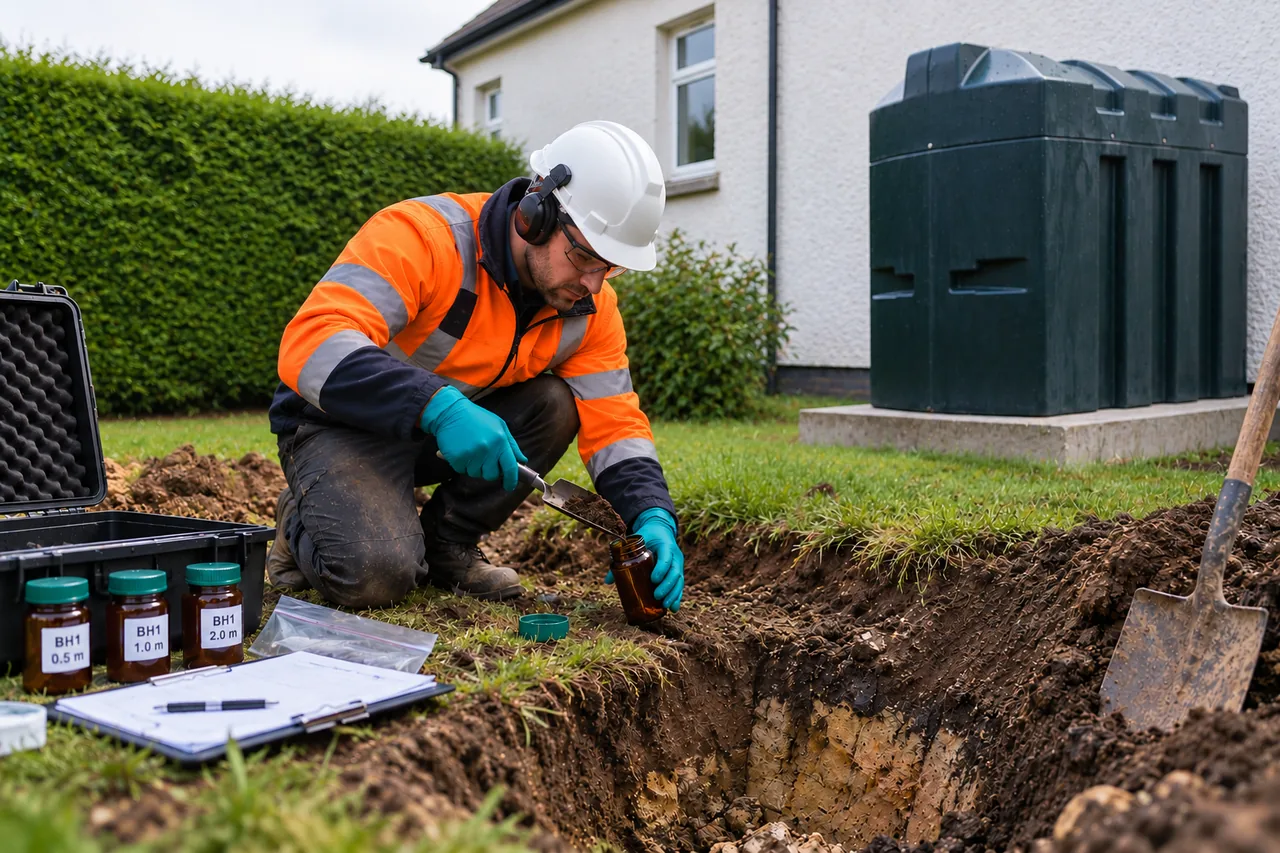
A useful sampling plan explains the question being investigated. Is the purpose to locate a likely entry point, characterise exposure in an occupied room, check the effect of remedial work, or investigate a complaint that happens only in certain conditions? The purpose influences where, when and how sampling takes place.
The US Environmental Protection Agency describes petroleum vapour intrusion as the movement of vapours from a subsurface source into buildings. [3] This is useful technical background, not a Northern Ireland residential clearance rule. Your investigator should explain whether that pathway is plausible at your property and what evidence supports or weakens it.
Ask how room use, windows, ventilation equipment, heating and recent building work were recorded. Also mention other potential sources such as stored products or renovation materials. This is about interpreting the results honestly; it does not mean that an oil smell should be dismissed because other products exist in the building.
A sample from one location cannot describe every untested room. Ask which areas are represented, which are not, and whether the conclusion depends on assumptions about the rest of the building. If an important space could not be accessed, the report should say so.
Read the laboratory report with its explanation
Request the sample reference, collection location, dates, analytical method and list of reported substances. Check that the narrative refers to the same samples as the laboratory tables. Ask what quality checks were carried out and whether any problem affected the usefulness of the result.
Look carefully at units. A figure expressed in one unit cannot be compared directly with a criterion expressed in another. Ask the assessor to show any necessary conversion and explain the basis. You should not need to calculate a household safety decision from an online conversion table.
“Not detected” also needs context. Ask about the reporting limit and whether the method was sensitive enough for the assessment being made. It means the laboratory did not report a substance above the applicable limit for that test; it should not be paraphrased as proof that no molecule was present anywhere in the house.
Where a result is close to a decision point, ask how uncertainty was handled. The answer may involve reviewing the method, conditions or need for further evidence. More testing is not automatically better: additional sampling should resolve a defined question rather than simply generate another report.
Check the basis of any comparison value
Ask where the comparison value comes from, which substance it covers, its averaging period and the population or setting for which it was developed. A statement that the reading is “below the limit” is incomplete without those details.
HSE's workplace exposure limits concern occupational exposure and defined averaging periods. [4] A workplace figure is not, by itself, evidence that a home is suitable for continuous residential occupation, including use by children. If such a figure appears in a domestic assessment, ask the specialist to explain its relevance and limitations.
There is no single number in this article that can decide whether your home is safe. The appropriate interpretation requires the relevant chemicals, exposure circumstances and assessment framework. Ask for a conclusion expressed in plain English, with its conditions, instead of relying on a colour-coded meter display.
Separate present conditions from the completion decision
An assessment made while windows are open and temporary equipment is running describes those conditions. Ask what must be demonstrated before the equipment is removed or normal occupation resumes. Do not switch off protective equipment yourself to create a test scenario; the specialist should plan any necessary assessment safely.
Likewise, a satisfactory result on a particular day does not explain whether an untreated source remains or could affect conditions later. Ask how the air findings fit with the ground investigation and the remediation plan. Any proposed follow-up should state what will be checked and what would trigger further action.
Request a written decision that distinguishes immediate precautions, suitability of particular rooms, outstanding work and completion. These may be separate milestones. If the insurer is arranging accommodation, it also needs a clear account of the technical advice rather than an assumption that the end of a contractor's visit means the household can return.
Keep a practical record and seek help promptly
Northern Ireland's domestic-spill guidance advises contacting the council's environmental health department where there is a strong indoor oil smell, and opening doors and windows if safe. [5] Seek medical advice if exposure is causing concern or symptoms; tell the clinician that heating-oil exposure is suspected. For an immediate emergency, use the emergency services.
Keep the record simple: date, location, ordinary room use, observed smell and any advice received. Share relevant household needs privately with the professional assessing occupation. Avoid deliberately smelling contaminated materials or using family members as a test of whether an area has improved.
If advice conflicts, ask the professionals to identify the exact disagreement. It may concern different rooms, different sampling conditions or different decisions. A coordinated written response is more useful than asking the homeowner to choose between unexplained assurances.
Your practical checklist
- Record where and when fumes are noticed without increasing exposure.
- Confirm whether the release has stopped and the source is understood.
- Ask what each instrument or sample actually measures.
- Request units, reporting limits and sampling conditions.
- Check the purpose and scope of any comparison criterion.
- Obtain clear advice on occupation, controls and follow-up.
Your next step
Ask for the air-testing plan and a plain-English explanation of the decision it is intended to support. Read our guides to health concerns after a spill, sampling and laboratory results and checking that cleanup has succeeded.
Related homeowner guides
Sources and further reading
- UKHSA — Kerosene: general information. Public-health background; not a property-specific assessment.
- ION Science — Can I detect individual chemicals with a PID?. Instrument manufacturer's explanation of selectivity.
- US EPA — Petroleum vapor intrusion. Technical background from the United States; not Northern Ireland regulatory criteria.
- HSE — Workplace exposure limits. Occupational scope in Great Britain.
- nidirect — Oil spills at home. Northern Ireland response guidance.
Sources checked 26 October 2026. Questions and examples are editorial guidance; interpretation requires competent assessment of the actual property. Informational guidance does not replace medical advice. Previous or illustrative readings cannot determine present conditions.
Need help with your situation?
If you need help identifying suitable specialist support, tell us what you have observed and the questions you need answered.