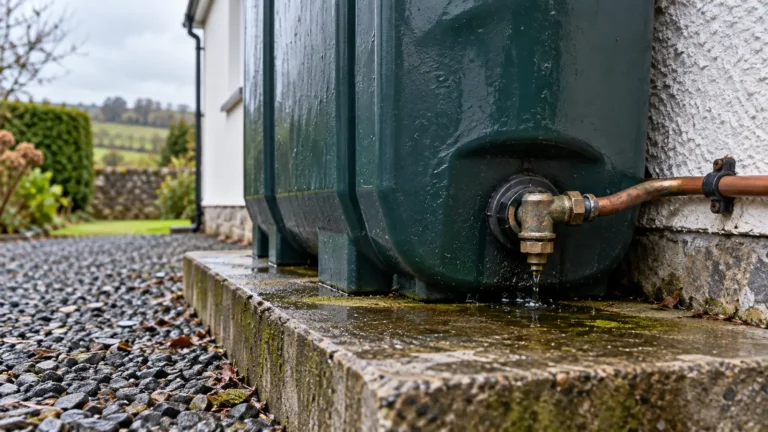
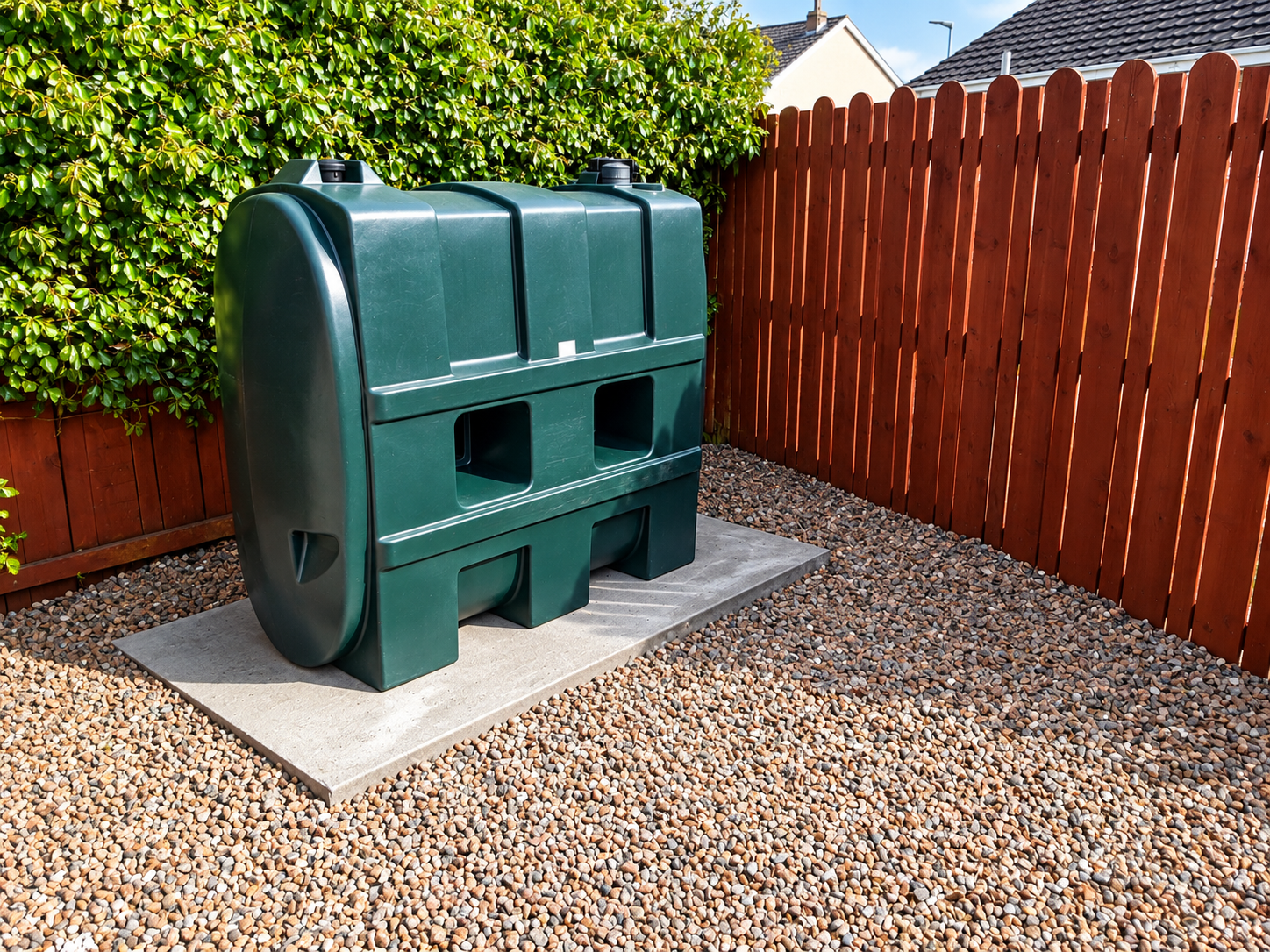
What should happen to an old heating-oil tank and its residues?
Knowledge Hub / Tanks and Heating Systems
Replacing a tank also creates a waste-handling task. This guide explains the Northern Ireland position and the records worth agreeing before the old tank is removed.
By Spill-Response Editorial Team · Sources checked: 26 October 2026 · Northern Ireland; explicit England comparison · 4-minute read
The short answer
In Northern Ireland, NIEA treats uncleaned waste domestic heating-oil tanks containing visible kerosene residues as hazardous waste. Its guidance requires an appropriately authorised destination and hazardous-waste consignment documentation. A tank that has stopped supplying oil is not automatically a clean waste item. Use a competent contractor and establish the route for the tank, remaining fuel and residues before removal. [DAERA]
In this guide
Empty, drained and clean describe different things
A household may call a tank empty when no useful fuel is being drawn from it. That does not establish its waste classification. Ask the removal contractor what condition it is in, what remains inside and how the material will be managed.
NIEA’s specific waste-tank guidance distinguishes uncleaned tanks from tanks whose visible residues have been removed. It also addresses waste produced by cleaning and requires the cleaning facility and process to be appropriately authorised. These are controls for the waste operation, not a household cleaning procedure. [NIEA]
Do not cut, burn, enter or attempt to clean the tank yourself. Arrange the work with someone competent to manage the fuel, equipment and waste-handling risks.
Ask for the whole removal scope
A useful quotation should describe more than “remove tank”. Ask the contractor to set out:
- How remaining usable fuel will be assessed and managed.
- How residues and other waste will be contained during the work.
- Who will disconnect the old installation and make the system safe.
- Who will carry the waste tank and where it will be taken.
- What documents will be supplied after removal.
- Whether the base, associated pipework and reinstatement are included.
These are scope questions. They do not mean that every tank needs the same work or that all existing fuel can be reused. Request an explanation of any assumptions, particularly where the inside of the tank has not yet been assessed.
Confirm the Northern Ireland waste route
For an uncleaned waste tank, NIEA’s guidance requires an authorised receiving facility and a hazardous-waste consignment note. It also distinguishes the coding of contaminated plastic tanks from contaminated metal tanks. Classification should be handled by the responsible competent operator. [NIEA]
Ask for the collecting business’s registration details and check the relevant DAERA register. If the contractor says an exemption applies, ask which exemption and confirm it with NIEA if necessary. [DAERA]
Keep the waste documentation with the installation paperwork for the replacement tank. That creates a useful history of when the old system was removed and who completed each stage.
Why an English exemption is not a Northern Ireland permission
The Environment Agency’s LRWP 47 is explicitly for England. It sets conditions for contractors storing and draining domestic oil tanks and residues, including location, containment and storage controls. Its existence is not permission to carry out the same activity in Northern Ireland. [Environment Agency]
If a contractor refers to “the UK rules”, ask them to identify the actual rules or authorisation applying where the work and waste handling will take place. A clear answer should name the regulator, the activity and the relevant permission or condition. This is especially useful where a business works across more than one jurisdiction.
Replacing a tank and investigating a leak are separate decisions
A replacement installation answers the question of how the heating system will operate in future. If oil has escaped, ask separately how the affected ground or building will be assessed. Do not assume the disposal of the old tank also closes the environmental part of the job.
If staining or an unexpected odour is noticed during removal, ask the contractor to record what was found and explain the next step. Keep photographs, dates and written observations together. Describe observations accurately rather than assigning a release date or quantity without evidence.
Your next step
Before booking, request a written scope covering disconnection, fuel and residues, carrier, destination and records. If a leak is active or suspected, use our emergency guidance and explain that concern when arranging assistance. For a planned replacement, resolve the waste route before the old tank is moved.
Need help with your situation?
If you need help identifying suitable specialist support, tell us about your situation and the questions you need answered.
Related guidance
Sources and further reading
- DAERA — Hazardous waste; waste domestic oil tank requirements
- NIEA — Guidance on Management of Waste Domestic Heating Oil Tanks; November 2019, effective January 2020
- Environment Agency — LRWP 47: domestic oil tanks and residues; 13 January 2026; England only
- DAERA — Registered waste carriers / transporters; public-register links
Sources checked on 26 October 2026. General information; the appropriate response depends on the incident and jurisdiction. Illustrations are not evidence of a particular project.