
Blyth Beach pollution: what the investigation teaches us
A coastal pollution investigation offers useful lessons about evidence, site history and careful interpretation. Its findings concern creosote, so they cannot predict the outcome of a domestic heating-oil spill.
By Spill-Response Editorial Team · Sources checked: 26 October 2026 · England case study; general investigation lessons · 4-minute read
The short answer
The useful lesson from Blyth Beach is how to investigate an uncertain pollution problem: establish what the substance is, consider the history of the land, and gather evidence before choosing a remedy. This is a creosote case, not a domestic kerosene case. It cannot tell a householder how far their own spill has travelled, what treatment they need or how long their cleanup will take.
In this guide
What the official update established
The joint-response update published by the Port of Blyth on 5 October 2026 reported that laboratory testing had identified creosote. Investigators described a former timber-treatment works beside the affected area, operating until approximately 1980, as the likely source. The wording matters: a likely source is not a final allocation of legal responsibility. [Port of Blyth]
The update also described specialist investigation planning and a seawater sampling programme intended to inform future decisions. It reported restrictions at that time. Readers visiting the beach should consult current official notices; this article is a dated explanation of investigation principles, not live access or bathing advice. [Port of Blyth]
Separate observations from explanations
An observation describes what was seen or measured. An explanation connects that observation to a possible cause. Keeping them separate makes an environmental report easier to question and update.
For example, “the laboratory identified a particular substance in this sample” answers a narrower question than “this activity caused all of the contamination at this location”. Source attribution needs its own supporting evidence. Likewise, a photograph records conditions at a particular place and time; it is not a survey of everything below the ground.
Our interpretation is that a useful homeowner summary should distinguish three things: what is confirmed, what the consultant currently thinks is happening, and what further work will test that explanation. Those headings make uncertainty visible without making the whole investigation sound inconclusive.
Why the history of a site belongs in the investigation
The LCRM risk-assessment guidance starts with a desk study and walkover, then develops a conceptual site model: an explanation of possible connections between contaminants, routes of movement and things that could be harmed. Investigation and monitoring refine that model. [Environment Agency]
For a homeowner, a practical question is: “Which parts of your interpretation come from our recent leak, which come from the site history, and which are still untested?” If an old feature or neighbouring activity is relevant, ask how it was identified and what evidence would distinguish it from the current incident. This is a request for a clear explanation, not an invitation to assign blame.
What transfers to a heating-oil spill—and what does not
The transferable lesson is the discipline of investigation. The chemical identity, physical setting and circumstances of an incident still need to be established independently.
Do not use the Blyth case to set a domestic excavation depth, predict a remediation cost or claim that heating oil will behave like creosote. A useful comparison explains a method of thinking; it does not substitute one site’s conclusions for another’s.
There is also an important distinction between managing historic contamination and responding to a new pollution incident. The LCRM guidance sets out different expectations and limits on applying its historic-contamination risk-assessment approach to new pollution. An old industrial case should not become a reason to postpone action on a current leak. [Environment Agency]
Four questions worth taking to your specialist
- What have you directly observed or measured, and where are the supporting records?
- What substance or mixture are the laboratory tests designed to identify?
- What alternative explanations remain plausible, and how will you test them?
- Which decision will the next investigation or monitoring step enable us to make?
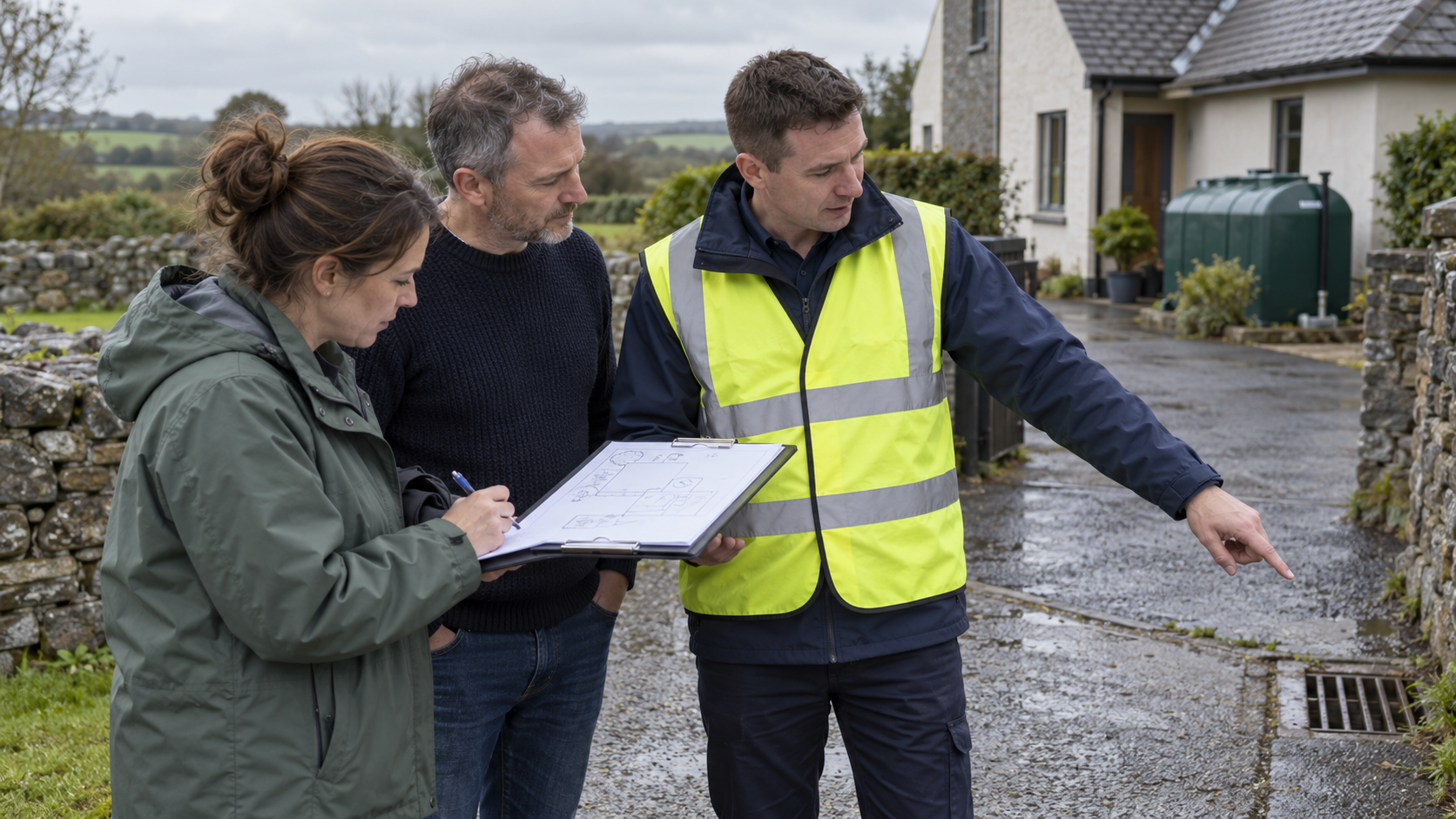
These are communication questions rather than instructions for designing your own investigation. Ask for answers in plain English, with a marked-up plan if that makes the explanation clearer. A helpful report should let you follow the reasoning from the evidence to the proposed next step.
Your next step
If you are dealing with an active leak, use our emergency guidance first. For a spill already under investigation, ask for the current evidence summary and the purpose of the next stage. This turns a distant case study into a useful conversation about your own property.
Need help with your situation?
If you need help identifying suitable specialist support, tell us about your situation and the questions you need answered.
Related guidance
- How a spill site is assessed
- Understanding sampling and laboratory results
- How heating oil can affect groundwater
Sources and further reading
- Port of Blyth — Localised pollution on Blyth Beach; update 5 October 2026
- Environment Agency — LCRM: Stage 1 risk assessment
- Environment Agency — LCRM: Before you start; updated 12 June 2025
Sources checked on 26 October 2026. General information; the appropriate response depends on the incident and jurisdiction. Illustrations are not evidence of a particular project.