What happens when a loss adjuster visits after an oil spill?
Knowledge Hub / Insurance and costs
The short answer
An oil spill loss adjuster will usually gather information about the incident, inspect the reported damage and consider the claim under the insurance policy. They may arrange specialist investigations or review proposed work and costs. The first visit is often a fact-finding stage, so it may not produce a final decision about cover or the full cleanup plan.
An insurer-appointed loss adjuster assesses the cause and extent of the loss, how the policy applies and the reasonable cost of the proposed work. They may manage the claim within the authority given by the insurer. Their appointment is by the insurer, but the assessment should still be fair, evidence-based and consistent with professional obligations.
In this guide
- Who is the loss adjuster working for?
- What might happen during the visit?
- Prepare a short timeline and one folder
- Show how the spill affects everyday life
- Ask who is deciding the technical scope
- Discuss the plan before the finish date
- What should I check before signing anything?
- What if I disagree with something?
- Before the adjuster leaves
- If you would like some help
- References and further reading
Being told that a loss adjuster is coming can sound more intimidating than it needs to. You may wonder whether you are expected to explain the leak, defend every decision or have all the paperwork ready.
You are not expected to know what is happening beneath the ground or how to design a remediation programme. Your role is to explain what you have observed, provide the records you have and raise the issues that matter at your property.
A little preparation can make the visit more useful and help you leave it with a clearer idea of what happens next.
Who is the loss adjuster working for?
For an insurer-arranged visit, the adjuster is normally instructed by the insurer. They assess the circumstances and value of the claim and may make recommendations or decisions within the authority given to them.
That appointment does not remove the expectation of fair, professional handling. It does mean you should understand the adjuster’s role rather than assume they have been appointed as your personal representative.
The Chartered Institute of Loss Adjusters describes loss adjusting as an evaluation of the cause, damage, policy conditions and claimed costs. It also notes that policyholders can appoint professionals on their own behalf. Ask who instructed each person and what they have been asked to do; job titles alone do not answer every question.
What happens during an oil spill loss adjuster visit?
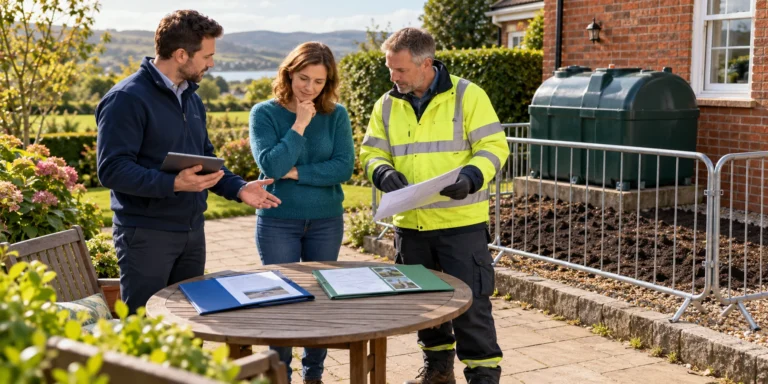
The adjuster may begin by asking you to describe how the spill was discovered. They may look at the tank and accessible pipework, photograph affected areas and discuss any work already carried out.
Expect questions about the sequence of events, recent deliveries, servicing, previous problems and the effects on your use of the property. Answer from your records where possible, and say when something is an estimate.
The visit may also cover contractors, estimates, accommodation and how further reports will be obtained. Some issues can be addressed quickly; others will depend on investigation results.
A visual inspection by a loss adjuster is not automatically a complete environmental investigation. Oil can travel beneath surfaces and along pathways that are not visible during a walk around the property. Ask what specialist assessment is proposed and what questions it needs to answer.
Prepare a short timeline and one folder
You do not need to recreate every detail of the property’s history. Start with the information most directly connected to the incident.
Have available:
- Your policy documents and claim reference.
- A short timeline of discoveries, calls and emergency actions.
- Delivery receipts and servicing records you can find.
- Photographs or videos taken safely before and during work.
- Contractor reports, estimates and invoices.
- Notes about affected rooms, heating, water, access or neighbouring property.
If a document is missing, make a note to obtain it. Do not invent a date or reconstruct a service history from memory as though it were documented.
Where original equipment has been removed, ask the contractor for its condition record and photographs. Do not retrieve contaminated material yourself just to have something to show at the appointment.
Show how the spill affects everyday life
The visible stain may be only part of what you need to discuss. Explain if a bedroom cannot be used, the heating is isolated, access is restricted or you have concerns about a water supply.
Be specific about practical needs. “My parent cannot use stairs, so an upstairs-only temporary arrangement would not work” gives the team something concrete to plan around.
You can have a trusted person with you to take notes or help explain your concerns. If you need information in writing, more time to understand documents or another communication arrangement, say so before the visit if possible.
For a business, bring a separate note of affected operations. Identify which areas are residential, commercial or shared, and ask what evidence is needed for any trading-related part of the claim.
Ask who is deciding the technical scope
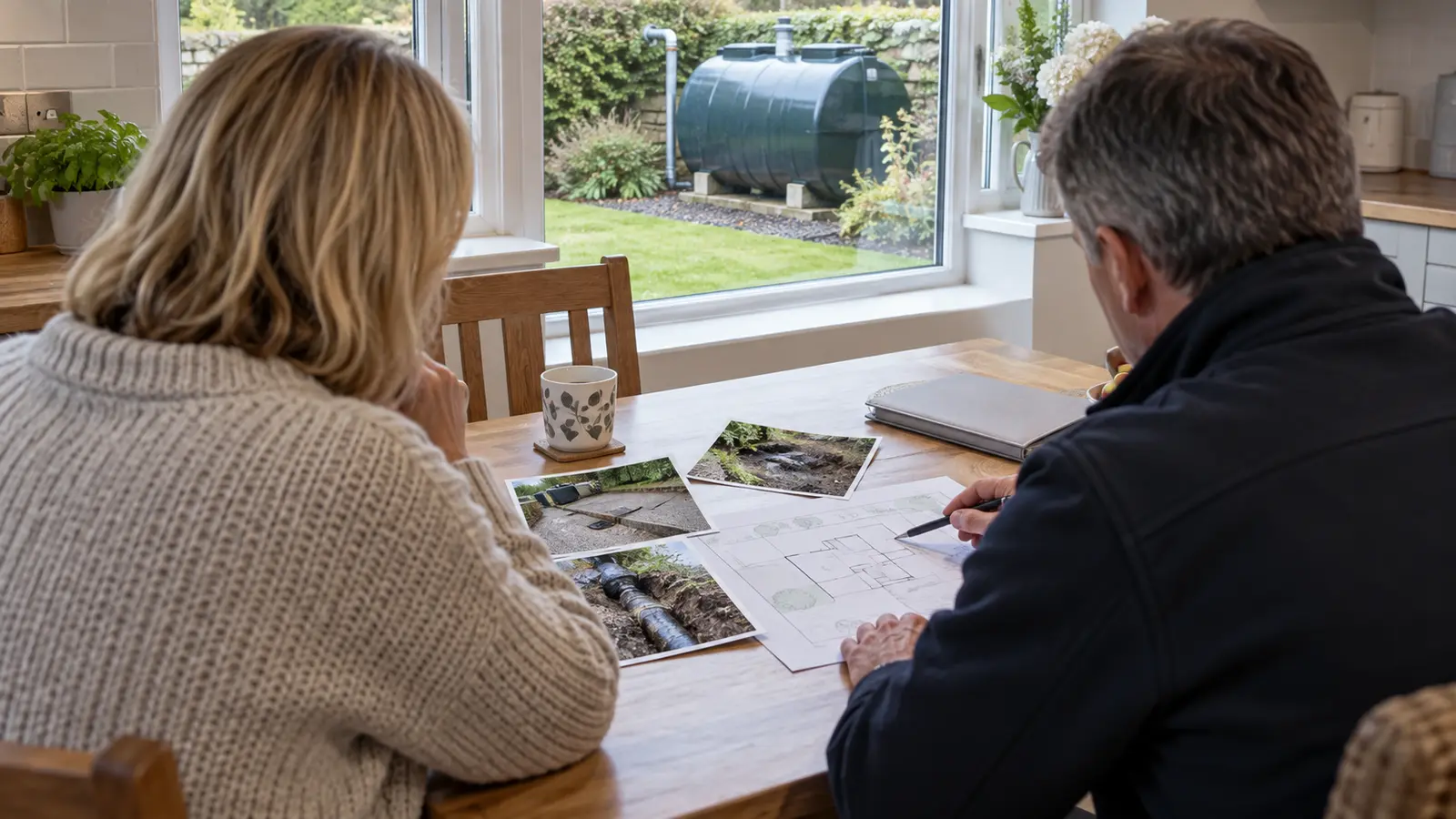
An oil-spill project may involve a loss adjuster, environmental consultant, remediation contractor and heating engineer. Some organisations provide more than one service, but the responsibilities still need to be clear.
Ask who will establish the extent of contamination, prepare the remediation proposal and decide how completion will be demonstrated. Also ask who can authorise expenditure and who is your day-to-day contact.
Our guide to insurance roles after an oil spill explains those distinctions. A useful outcome from the visit is knowing whom to contact for a technical question and whom to contact for a payment decision.
Discuss the plan before the finish date
It is understandable to ask when everything will be back to normal. The answer may depend on findings that are not yet available.
Ask for the next milestone: an investigation visit, laboratory results, a proposed scope or a coverage decision. Then ask what could change that timetable and when you will receive an update.
The cleanup proposal should eventually address more than removing visibly affected material. Ask about verification, the final report and reinstatement. Establishing these expectations early is easier than discovering at the end that different people had different definitions of “finished”.
What should I check before signing anything?
Ask what the document does. Is it confirming that a visit took place, authorising an investigation, appointing a contractor or agreeing a settlement?
Read the description and cost implications. If you do not understand a clause, ask for an explanation and a copy. A signature should follow understanding of the document, rather than a feeling that the appointment needs to move on.
If a cash settlement is proposed, ask what work it is intended to fund, whether the scope is complete and what would happen if further contamination is discovered. Obtain advice if the consequences are unclear before accepting a final settlement.
What if I disagree with something?
Start with the point that needs resolving. “The plan does not show the water pipe beside the tank” is more actionable than “I do not trust this assessment”.
Ask what evidence supports the conclusion and provide any evidence that appears to have been missed. If the issue is technical, ask for the environmental specialist’s explanation. If it is about cover, request the relevant policy wording and the insurer’s position.
There may be a reasonable explanation or a genuine gap requiring further work. Keep both possibilities open until the evidence has been discussed. A second opinion can be useful for a defined unresolved issue, but check its scope and fee before commissioning it.
If the concern remains, raise it with the claims manager or use the insurer’s complaints process. Keep the urgent incident response separate from a longer-running disagreement wherever possible.
Before the adjuster leaves
Check that you can answer these questions:
- What has been agreed today?
- What remains undecided?
- Who is arranging the next action?
- What work is authorised, and who pays for it?
- When will I receive the next update?
- Who should I contact if conditions worsen?
Send a short follow-up note confirming your understanding. If you later spot a mistake in the visit record, correct it promptly and explain the basis for the correction.
The first visit does not have to resolve the entire spill to be useful. It should move the claim towards a clearer account of the damage, a sensible investigation and defined next steps.
If you would like some help
If you would like help finding a contractor, we can help. If specialists are already involved, let us know what work has been proposed so the discussion starts from the information you already have.
References and further reading
- Spill-Response: Understanding insurance roles after an oil spill — roles, contractor choice and documentation.
- CILA: Advice for policyholders — loss-adjusting roles and appointments.
- Spill-Response: How an oil-spill site is assessed and remediated — investigation and completion evidence.
- FCA: ICOBS 8.1, Insurers’ general duties — claims-handling standards within the rules’ scope.
Related guides: checking heating oil spill insurance cover, understanding costs you may need to pay yourself and what to tell your insurer after a spill.
Spill-Response Editorial Team. General information for Northern Ireland readers; appointments and authority vary between claims.