Can a heating-oil spill affect buried drinking-water pipes?
Knowledge Hub / Groundwater
A mains-water connection does not remove every local contamination pathway. This guide explains why buried service pipes deserve attention after an oil spill.
By Spill-Response Editorial Team · Sources checked: 26 October 2026 · Northern Ireland; supporting England/Wales technical guidance · 4-minute read
The short answer
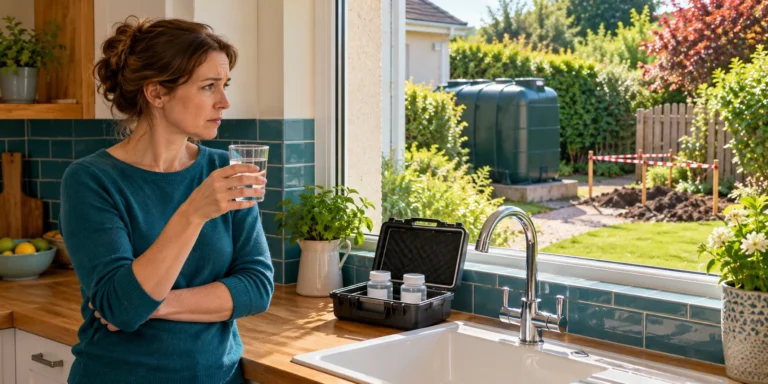
Some plastic drinking-water pipes can be affected when fuel contamination reaches them in the ground. A property can therefore need a local water-supply assessment even when it receives treated mains water. If tap water develops a fuel-like taste or smell, contact your water supplier immediately. In Northern Ireland, nidirect directs mains-water concerns of this kind to Northern Ireland Water. Do not deliberately taste water to test it. [Drinking Water Inspectorate] [nidirect]
In this guide
The water inside the pipe and the ground outside it
The Drinking Water Inspectorate explains that oil and other hydrocarbons can contaminate plastic water pipes in the ground. It also notes that the problem can take time to emerge and that the source may be some distance along a supply route. Its advice is a useful technical explanation; its England-focused reporting references should not be substituted for Northern Ireland contacts. [Drinking Water Inspectorate]
The question for a particular property is whether there is a credible connection between contaminated ground and a vulnerable part of its water supply. “We have mains water” and “there is a pipe nearby” are both incomplete answers. The material, location and condition of the relevant pipework need to be established by the appropriate professionals.
What to report when you contact the supplier
nidirect identifies a petroleum, diesel or solvent-like taste or smell as a reason to contact Northern Ireland Water. Tell the adviser about any known fuel spill as well as the change in the water. [nidirect]
Prepare a short factual account rather than a diagnosis:
- When did you first notice the change, and at which taps?
- Was the observation continuous or intermittent?
- Where is the known spill, and when was it discovered?
- Is there a recent delivery, repair or other relevant event to mention?
- What instructions have you already received, and from whom?
Ask for explicit advice on drinking, cooking, washing and any alternative supply while the concern is investigated. Repeat that advice back if necessary and note the reference number. Keep questions about symptoms separate from the environmental investigation and seek appropriate medical advice if someone is unwell.
Three different questions should stay separate
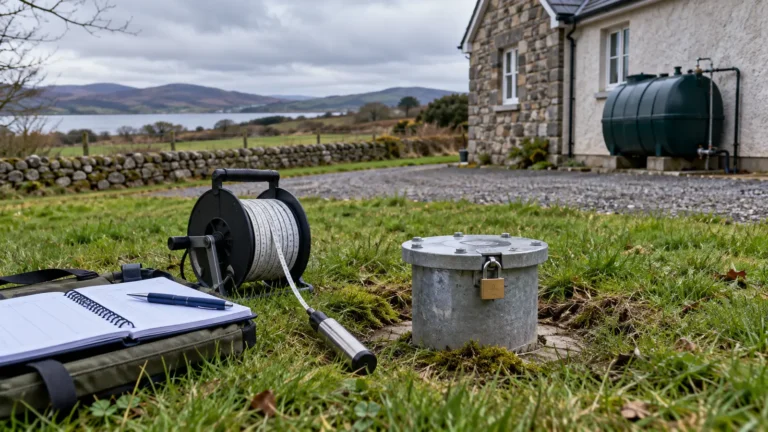
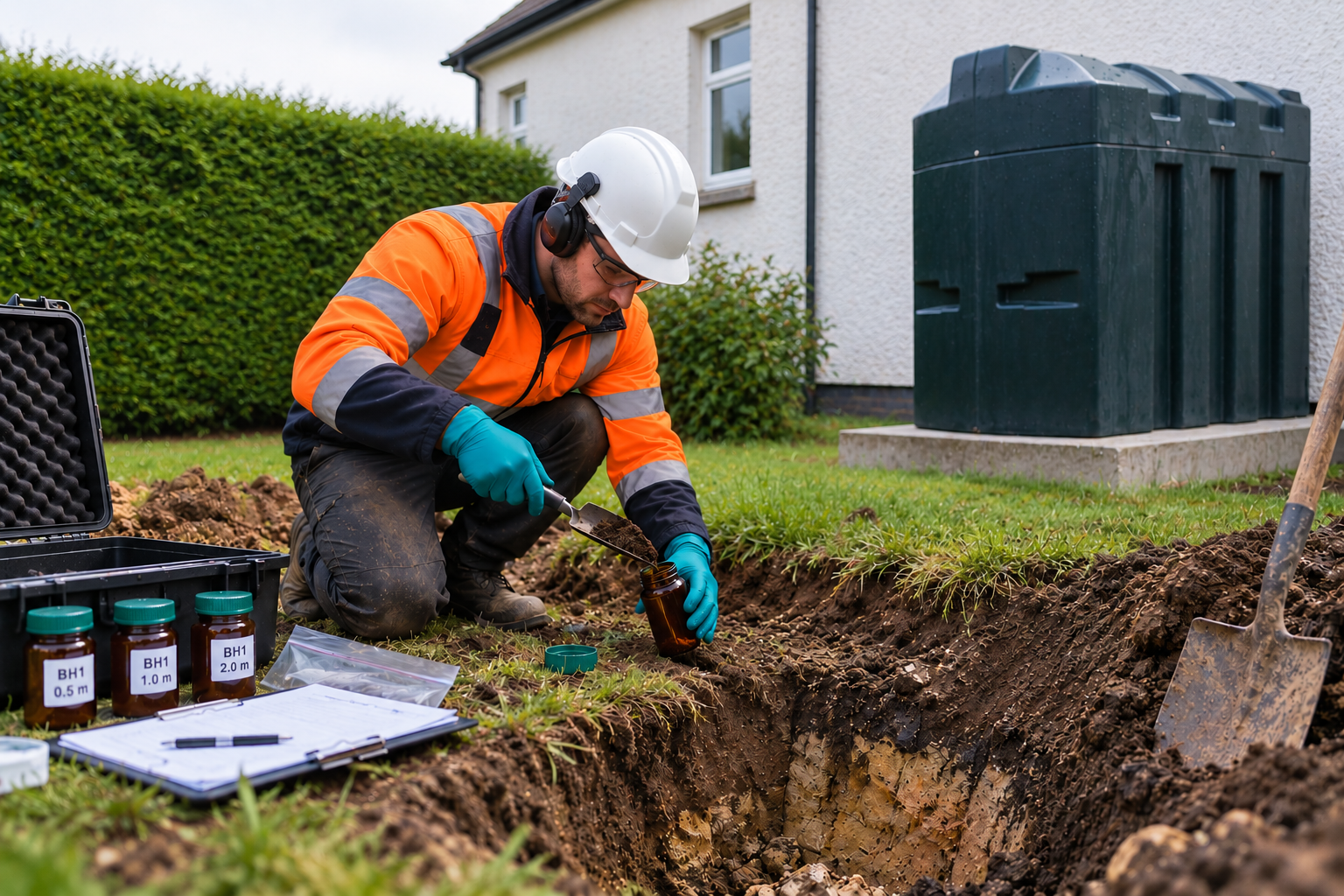
A soil sample near a tank, a sample from a groundwater monitoring point and a sample from a drinking-water tap answer different questions. Do not treat one result as a substitute for all three.
Ask the consultant and water supplier to explain how their work fits together: who will establish the supply route, who decides where water samples are needed, and who will confirm the actions required before normal use resumes? This is particularly helpful when several organisations are involved and each has a different part of the problem to resolve.
If you use a private supply, make that clear at the first contact. Ask the local council’s environmental health team for the appropriate private-supply route rather than assuming that the mains-water process applies to your installation.
Why a quick flush is not a reliable clearance test
The Drinking Water Inspectorate states that contaminated pipework requires replacement and that flushing does not resolve contamination of the pipe itself. The extent and specification of any replacement should be determined through the water-supply investigation. [Drinking Water Inspectorate]
Do not improvise a treatment or use the disappearance of an odour as your own clearance decision. Ask for a written explanation of what has been checked and the basis for any advice that normal use can resume. If a contractor proposes new pipework, ask which route and material have been selected and how those choices address the identified circumstances.
A practical record to keep
Keep the water supplier’s incident reference alongside the spill report, photographs and correspondence. A simple log can record the date, the observation, the person contacted, their advice and the next agreed action. Do not collect samples unless the responsible organisation instructs you how; an unplanned household sample may not answer the investigation’s question.
Photograph locations from a safe position and mark approximate known features on a sketch. Label uncertain routes as uncertain. A sketch is useful for a conversation; it should not be used to decide where to dig.
Your next step
For an active spill, follow emergency oil-spill guidance and obtain specialist assistance. For a drinking-water concern, contact the water supplier directly and follow its instructions. Our enquiry form is not a substitute for reporting a water-quality problem.
Need help with your situation?
If you need help identifying suitable specialist support, tell us about your situation and the questions you need answered.
Related guidance
- How heating oil can affect groundwater
- Who may need to be notified
- Understanding sampling and laboratory results
Sources and further reading
- Drinking Water Inspectorate — Oil, fuel and other hydrocarbons; England/Wales technical context
- nidirect — Dealing with drinking water problems; Northern Ireland
- nidirect — Oil spills at home; Northern Ireland
Sources checked on 26 October 2026. General information; the appropriate response depends on the incident and jurisdiction. Illustrations are not evidence of a particular project.